22 Beautiful Nature Living Books for Your Charlotte Mason Homeschool
Some of my favorite nature study moments happen when one of my children recognizes something from a book we just read.
That is one of the reasons I love using living books alongside nature study. They help children become familiar with the natural world, give them living ideas to think about, and often lead to more careful observation when we are outside.
In this post, I am sharing some of our favorite nature living books for younger and older children, along with the ones I would reach for first in a Charlotte Mason homeschool.
This post may contain carefully chosen affiliate links to help support our homeschooling journey. Thank you for supporting my family through your purchases! You can read my full affiliate disclosure policy here.
Nature Living Books for Your Homeschool
I chose nature books that are engaging, help children notice the natural world more closely, and fit naturally into a Charlotte Mason homeschool. Many are books I have used in my own homeschool, and others are already on my list to use with my children for nature study or read-aloud time over the next couple of years.
Animal Stories & Woodland Nature
These Charlotte Mason nature books use engaging animal stories to help children learn about wild animals, their habits, and the places they live.
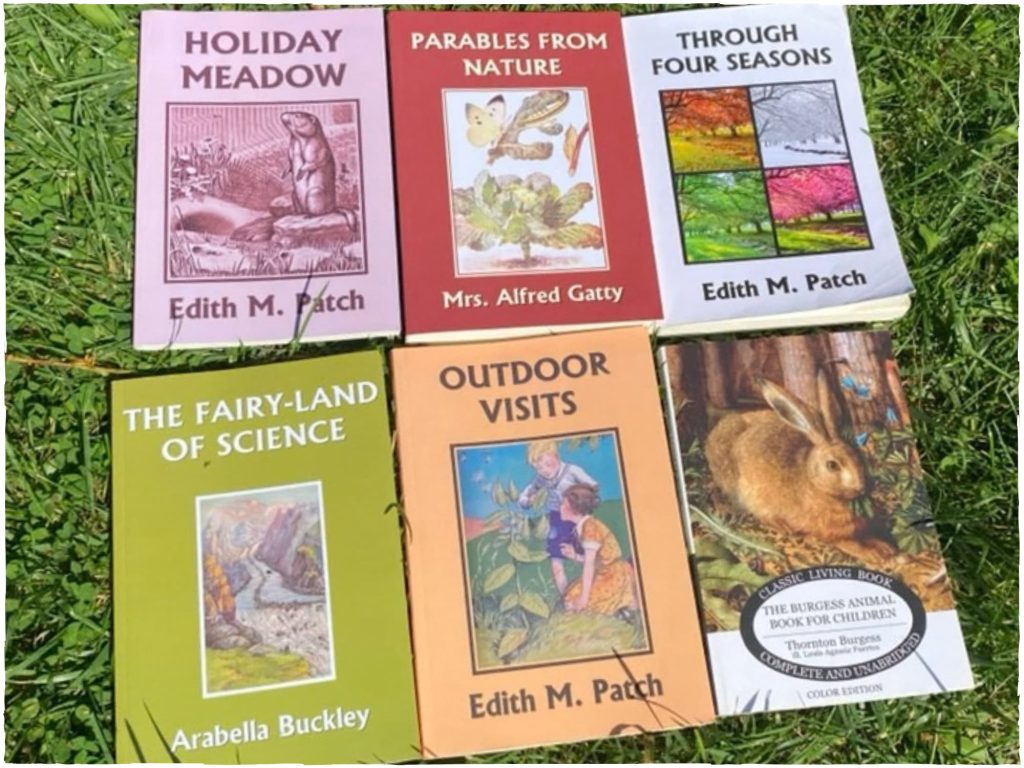
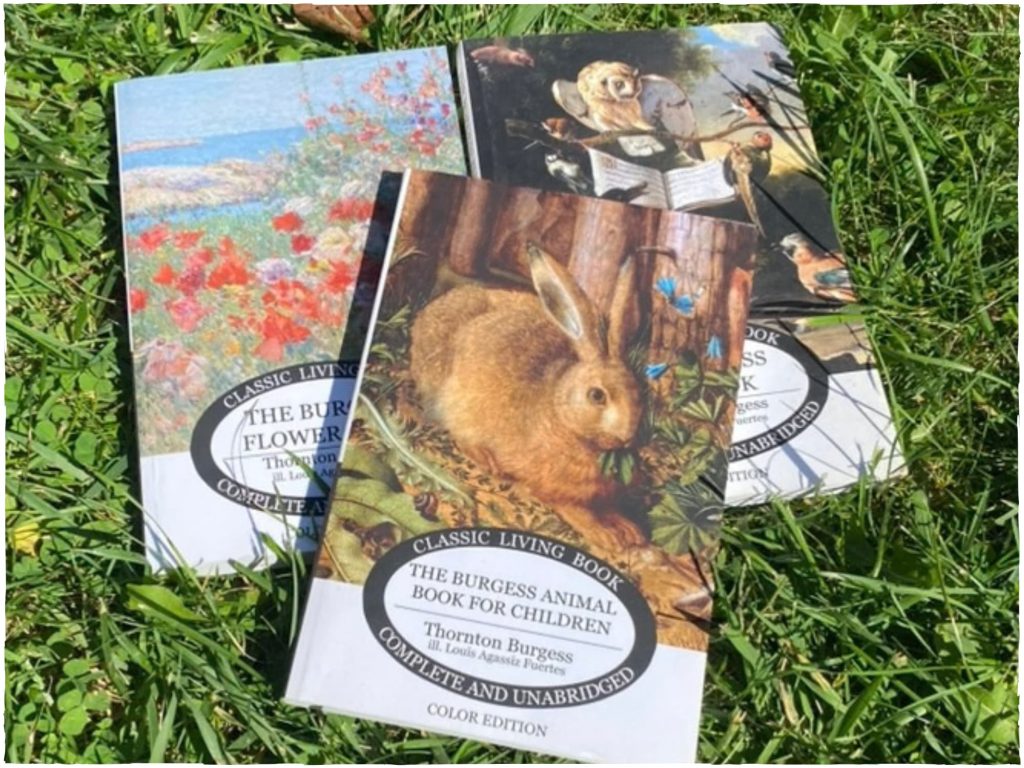
The Burgess Animal Book for Children by Thornton W. Burgess
Peter Rabbit visits Old Mother Nature to learn about the animals that live around him, meeting everything from squirrels and mice to even larger animals like moose, caribou, and bears along the way. The stories give children an easy way to become familiar with each animal’s habits, appearance, and way of life without feeling like a traditional science lesson. We are using this one in our own homeschool right now, and I especially like how often my children remember specific details about the animals we are seeing on our nature walks or out in our yard because of what we have read in the book.
Find it here: The Burgess Animal Book for Children
Wild Animals I Have Known by Ernest Thompson Seton
This collection follows the lives of wild animals like wolves, rabbits, foxes, and crows, giving your child a closer look at their habits and the way they live in the wild. The stories are best suited to older elementary and middle school children (about ages 9–13) because the writing is more detailed and some of the stories are a little more mature in nature. It’s a really good choice when your child is ready to move beyond shorter animal stories into nature reading with a little more depth.
Find it here: Wild Animals I Have Known
Ways of Wood Folk by William J. Long
William J. Long was a naturalist and writer who spent long stretches of time observing wildlife, and those firsthand observations are what make this book so interesting. He shares what he noticed about the animals he watched in a way that gives your child a closer look at their habits and behavior in the wild. This is a lovely choice for older elementary and middle school children who are ready for nature reading with more detail, because it gives them a clearer picture of how animals actually live, something they can begin to recognize for themselves outdoors.
Find it here: Ways of Wood Folk
Wilderness Ways by William J. Long
Wilderness Ways gathers stories from William J. Long’s own time spent watching animals in the wild, with a strong focus on the small behaviors and habits that are easy to miss at first. The stories have a little more movement and adventure than some of his other nature writing, which makes this a good choice for children who enjoy animal stories but are ready for something with more detail and depth. It gives older children a chance to get past simply identifying an animal and start paying attention to how it lives and what it is actually doing.
Find it here: Wilderness Ways
Among the Forest People by Clara Dillingham Pierson
Among the Forest People is a gentle collection of short stories about the animals who live in the woods and the small adventures that make up their days. The stories have such a warm, old-fashioned feel, while still giving children real glimpses into animal habits, relationships, and the way woodland creatures live alongside one another. The chapters are short and easy to enjoy during morning time or nature study, and this is the kind of book that can make even familiar animals feel a little more interesting the next time your child sees them outside.
Find it here: Among the Forest People
Among the Meadow People by Clara Dillingham Pierson
Written in the same gentle style as Among the Forest People, this earlier collection by Clara Dillingham Pierson focuses on the insects, birds, and other small animals that live in the meadow. The short chapters are a nice fit for younger children and give them a closer look at the kinds of animals they are most likely to notice in fields, gardens, and patches of grass. My children really enjoyed this one, and I like how well it pairs with Among the Forest People. Together they give children a gentle introduction to both meadow and woodland life.
Find it here: Among the Meadow People
Bird Stories & Bird Study
These living books for bird study help children learn bird names, songs, nesting habits, and behavior in a way that pairs naturally with birdwatching and nature study.
The Burgess Bird Book for Children by Thornton W. Burgess
In The Burgess Bird Book for Children, Peter Rabbit learns about the birds that live around the Old Orchard and Green Forest. The stories introduce children to different birds, their songs, nesting habits, markings, and the places they make their homes, giving them a strong foundation for recognizing birds outside for themselves. This was the first nature book I ever read aloud in our homeschool, and it became an instant favorite. My older children still talk about it years later, which is one of the reasons I think it is such a good place to begin if you want to bring bird study and nature lore into your homeschool.
Find it here: The Burgess Bird Book for Children
Birds Every Child Should Know by Neltje Blanchan
Birds Every Child Should Know introduces children to many of the birds they are most likely to see around them, with enough detail to help them begin telling one bird from another. It works especially well after a story-based book like The Burgess Bird Book because it gives a little more direct information about appearance, behavior, songs, and habits while still keeping the writing readable and interesting. This is a good choice when your children are ready to move from simply enjoying bird stories into identifying the birds they are actually seeing outside.
Find it Here: Birds Every Child Should Know
The Children’s Book of Birds by Olive Thorne Miller
The Children’s Book of Birds is a wonderful next step for children who are ready to learn more about how birds actually live. Olive Thorne Miller writes about nesting, feeding, migration, songs, behavior, and even the way young birds are raised, so the book gives a much fuller picture of bird life than simple identification alone. For a Charlotte Mason homeschool, it works especially well when your children are ready to move beyond identification and learn more about the habits and daily life of the birds they are watching.
Find it here: The Children’s Book of Birds
Citizen Bird by Mabel Osgood Wright and Elliott Coues
Citizen Bird follows a group of children as they learn about the birds around them through walks, conversations, and time spent outdoors. It blends story with real information about bird families, habits, migration, and identification, so there is quite a bit of nature study woven into the reading. I like this one because it feels very close to the way nature study can actually look in a homeschool, with reading together, heading outside, and then beginning to notice more of the birds that are all around us.
Find it here: Citizen Bird
Seasonal Nature & Outdoor Study
These nature living books help children follow the seasons, become more familiar with the animals and changes they notice outdoors, and give you plenty of ideas to build into your nature study throughout the year.
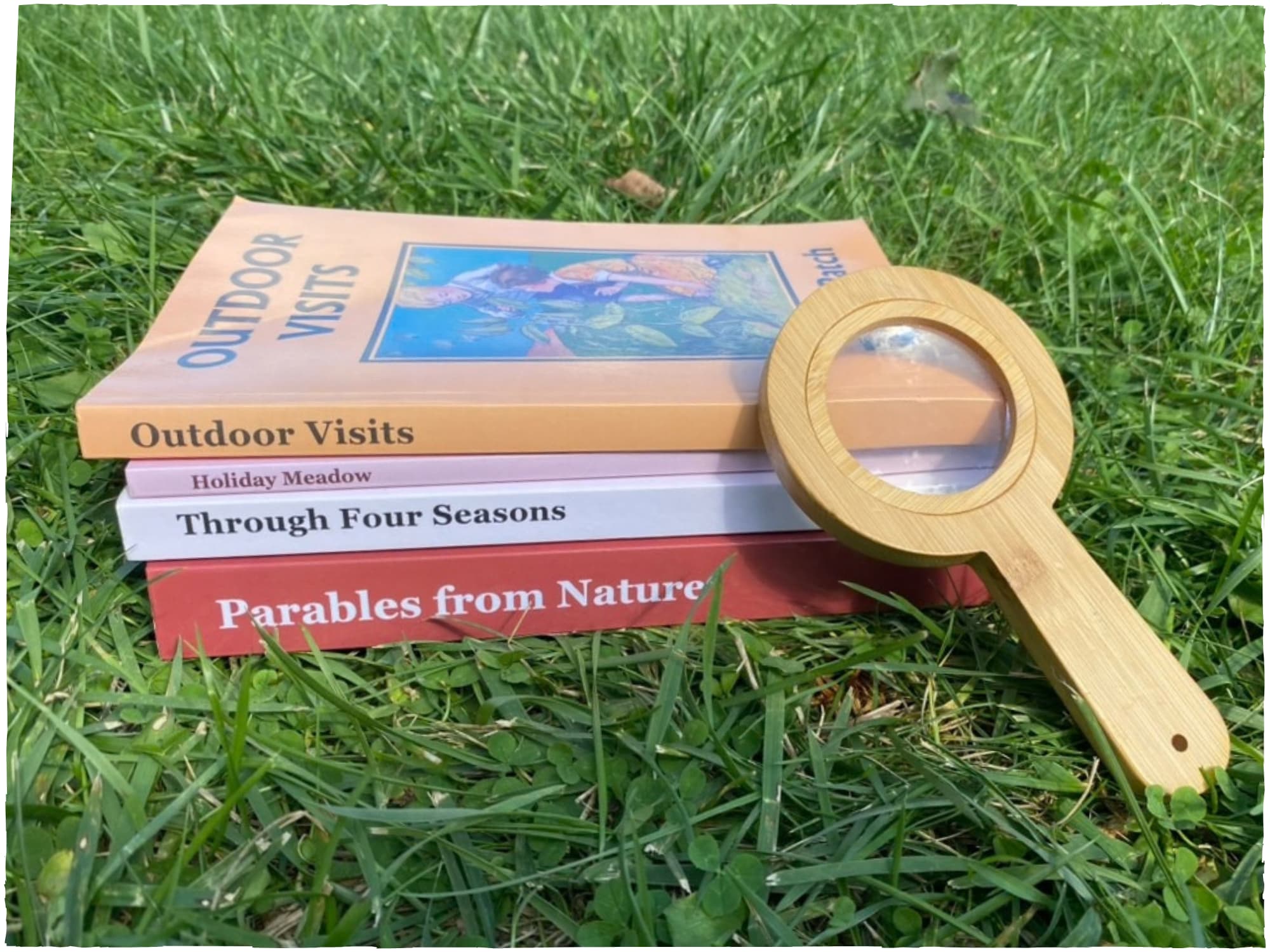
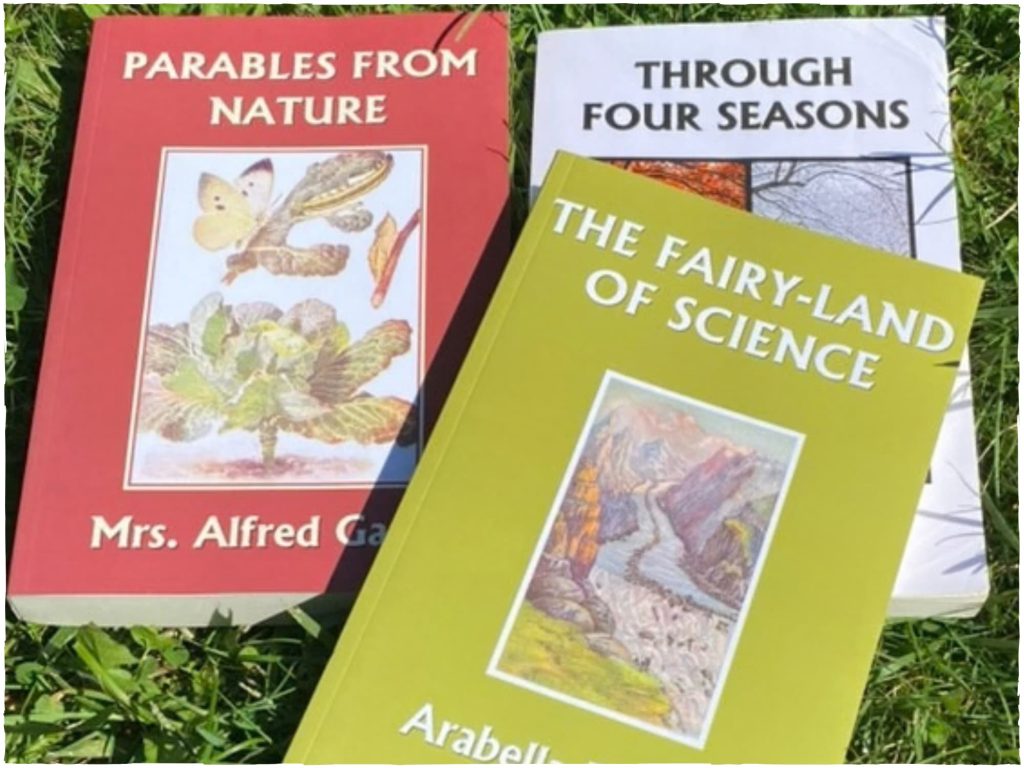
Through Four Seasons by Edith Patch
Through Four Seasons follows the natural world as it changes from one season to the next, making it especially useful when you want your nature lessons to match what your children are seeing outside right now. Edith Patch discusses plants, weather, birds, insects, and other animals in a way that gives you plenty to use as the year changes. I enjoy using this book because it gives me an easy way to bring a living nature reading into our lessons and keep our seasonal nature study connected throughout the year.
Find it here: Through Four Seasons
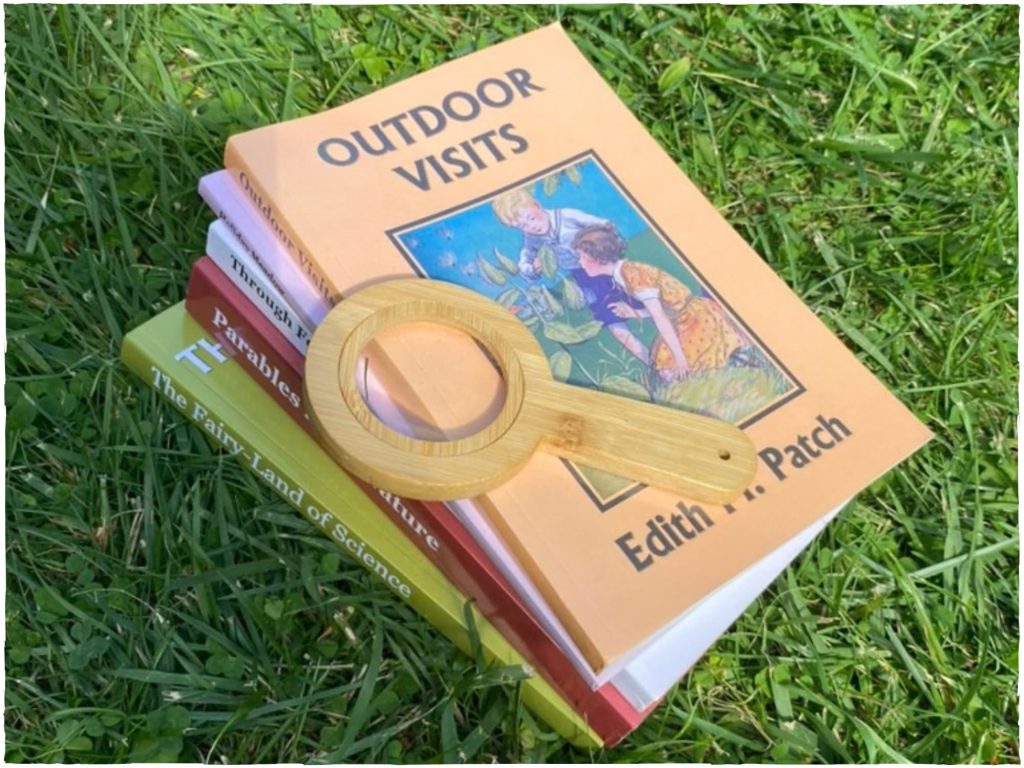
Outdoor Visits by Edith Patch
Outdoor Visits follows Nan and Don through the seasons as they notice the plants, animals, and changes they find around them. I love to use this one in our own homeschool because the stories are so gentle and sweet, and they make nature study feel especially inviting for my younger children. It is a wonderful choice when you want to introduce nature through story first, so your child is learning about the world around them in a way that feels natural and memorable.
Find it here: Outdoor Visits
Holiday Meadow by Edith Patch
Holiday Meadow is a little more fact-based than story-based, but it still has the warm, gentle feel that makes Edith Patch such a good fit for younger children. It introduces the plants, insects, birds, and other animals that live in a meadow, giving children a simple way to learn about the variety of life found there. This is a good choice for younger children because it gives them real nature knowledge in a format that still feels warm and enjoyable to read.
Find it here: Holiday Meadow
Among the Pond People by Clara Dillingham Pierson
Among the Pond People has the same gentle, story-filled charm as Clara Dillingham Pierson’s other nature books, this time focusing on the animals that make their homes in and around a pond. Frogs, turtles, fish, insects, and other pond animals are introduced through the stories in a way that helps younger children learn their habits and begin recognizing them more easily outside. The stories give children real nature knowledge in such a gentle way, and they can make a simple pond visit feel much more meaningful afterward.
Find it here: Among the Pond People
Among the Night People by Clara Dillingham Pierson
Among the Night People introduces children to the animals that are active after dark and the things they do while most of us are asleep. The stories help children become more familiar with nighttime animals, where they live, and the habits that make them different from the animals they see during the day. It gives children something familiar to connect with when they hear rustling outside, spot tracks in the morning, or catch a quick glimpse of an animal after sunset.
Find it here: Among the Night People
Where Butterflies Grow by Joanne Ryder
Where Butterflies Grow follows a black swallowtail from caterpillar to butterfly, but what makes it so charming is the way the book speaks right to your child. It gently invites them to imagine looking under a leaf, finding a caterpillar, and noticing each new stage as though they were discovering it outside for themselves. The detailed illustrations add so much to the reading, and together with the gentle text they make this a beautiful choice for younger children. It is just such a sweet story that truly evokes a sense of wonder.
Find it here: Where Butterflies Grow
Flowers, Seeds & Plant Life
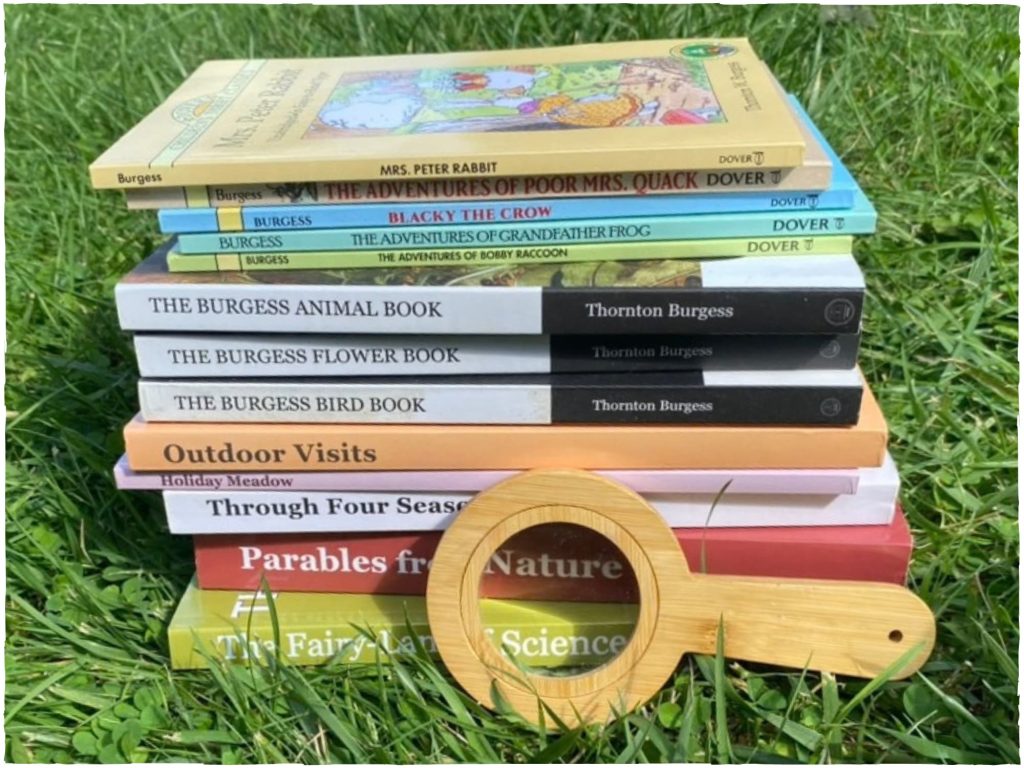
These nature living books help children learn about flowers, seeds, and the way plants grow, giving them a gentle introduction to botany through stories and close observation.
The Burgess Flower Book for Children by Thornton W. Burgess
The Burgess Flower Book for Children has the same gentle charm as the Burgess Bird Book and Burgess Animal Book, this time introducing children to wildflowers and the plants growing around them. Peter Rabbit learns through Old Mother Nature’s lessons, so your child gets to know the flowers through story, conversation, and all those little details Burgess is so good at bringing to life. We are really looking forward to reading this one over the next few months as the flowers begin to bloom and we can start looking for some of them together outside.
Find it here: The Burgess Flower Book for Children
Seed-Babies by Margaret Warner Morley
Seed-Babies begins with three children watching beans sprout and wondering about what they see. Their questions soon lead to peas, peanuts, nuts, fruits, bulbs, and all sorts of seeds, with much of the learning happening through the children’s conversations with the “seed-babies” themselves. This is a fun one for younger children because it gives them a simple, story-based introduction to plant life while still covering quite a bit of real botany.
Find it here: Seed-Babies
Living Science & Nature Ideas
These Charlotte Mason living science books explore the natural world through stories, conversations, and living ideas, giving children a gentle way to learn science through books that encourage curiosity, observation, and thought.
Parables from Nature by Margaret Gatty
Parables from Nature is different from the other books on this list because it uses the plants, animals, and patterns of nature to tell stories with deeper lessons underneath them. The stories touch on character, perseverance, obedience, choices, and the way we treat one another, all through the natural world. I really love this book because it brings nature study and habit training together so naturally, which feels very true to the Charlotte Mason way of letting subjects connect instead of treating everything like a separate lesson.
Find it here: Parables from Nature
The Story Book of Science by Jean Henri Fabre
The Story Book of Science covers a wide range of science topics through conversations and short stories, making it one of those books you can return to again and again. Because it moves across so many subjects, it works well to pull from throughout the year rather than feeling like a book you have to read straight through. I like having something like this on hand for those moments when a question comes up during lessons or time outside and you want to explore it a little further without having to turn it into a whole separate science lesson.
Find it here: The Story Book of Science
The Fairy-Land of Science by Arabella Buckley
The Fairy-Land of Science takes things children already know from everyday life and shows them the science at work underneath. Arabella Buckley has a way of making ordinary things feel worth wondering about, which gives children plenty to think about without turning the subject into a list of facts. It is especially helpful when you want your children to see science as something they can discover in the world around them, not just something they read about in a lesson.
Find it here: The Fairy-Land of Science
A Log’s Life by Wendy Pfeffer
A Log’s Life follows an old oak after it falls to the forest floor and shows how it slowly becomes home to insects, fungi, plants, and small animals. The book gently follows the changes around the fallen tree and helps children begin to see how each part of the natural world has its place. The beautiful illustrations add so much to the story, and the book makes it easy to see how even one fallen tree can support so much life around it.
Find it here: A Log’s Life
Not Sure Where to Begin?
If you are just starting with nature living books, The Burgess Animal Book or The Burgess Bird Book are wonderful broad choices. For younger children, I would start with one of Clara Dillingham Pierson’s gentle nature stories or Outdoor Visits. Older children may enjoy Wild Animals I Have Known or one of William J. Long’s books when they are ready for nature reading with a little more depth.
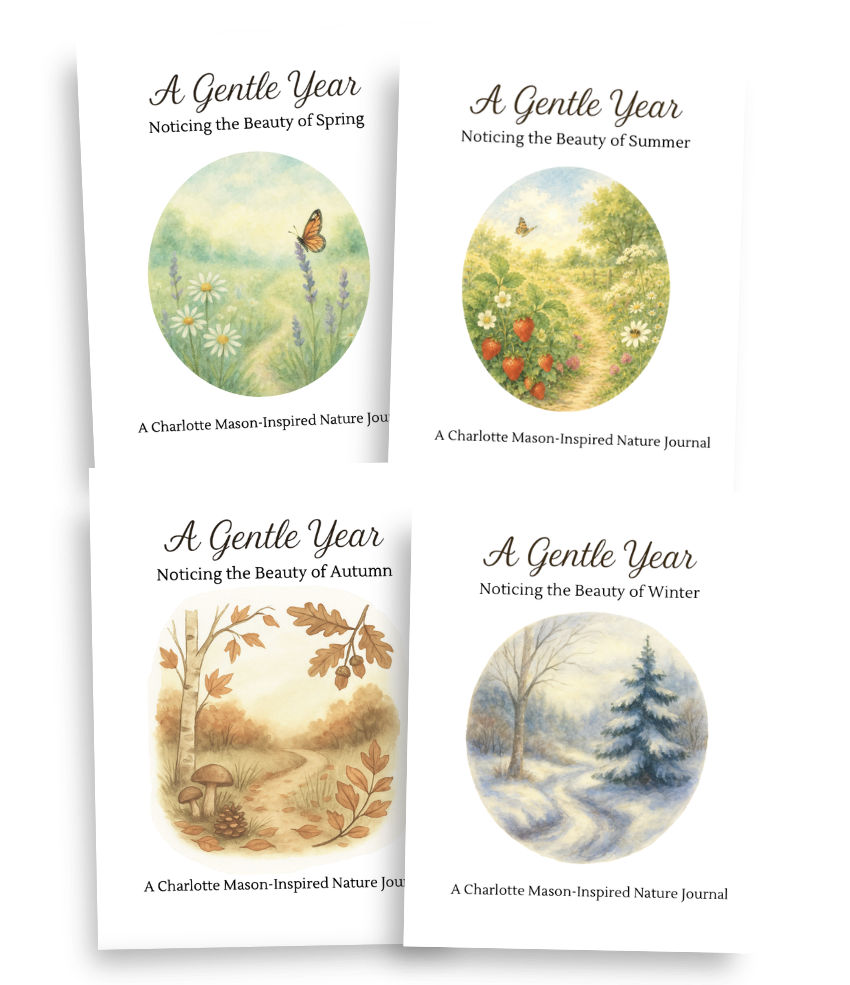
A Gentle Year: Four Seasonal Nature Journals
If you would like a little more guidance alongside your nature books and time outdoors, these seasonal journals give your children a simple place to sketch, record what they notice, and follow gentle nature prompts throughout the year. They are easy to use alongside the living books you are already reading, while leaving plenty of room for your child’s own observations and interests.
Explore the Year-Round Bundle →How We Use Nature Living Books in Our Homeschool
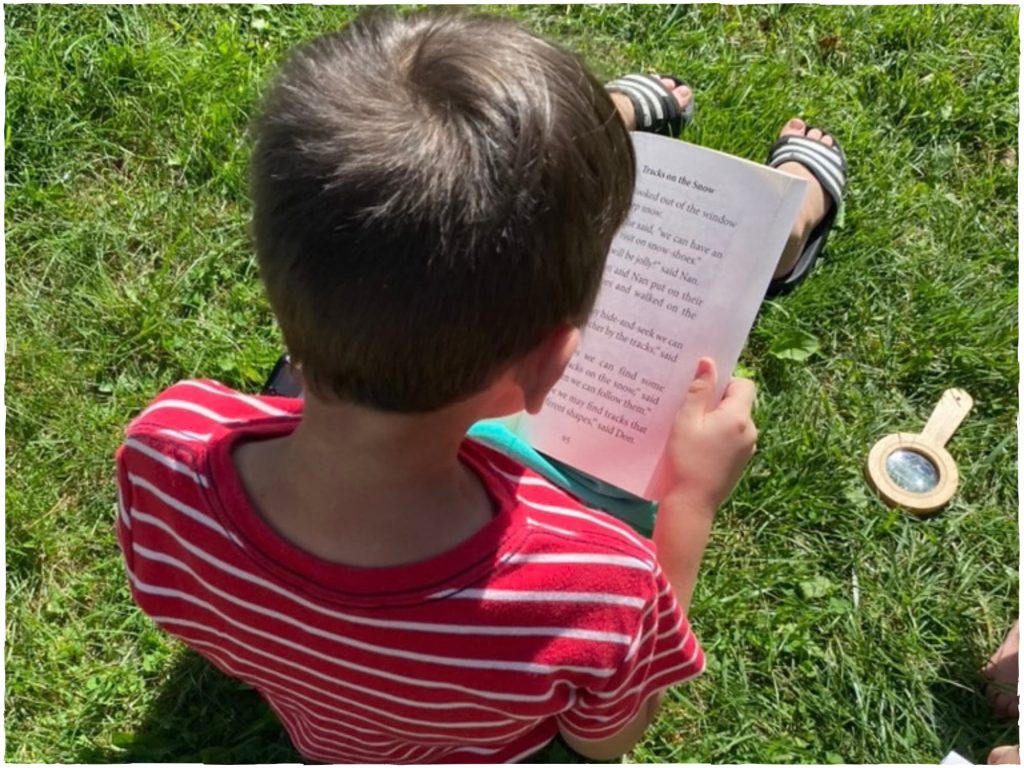
I keep nature reading pretty simple in our homeschool. We may read a short chapter during morning time, choose something that fits with the season, or pull out a book because one of my children has become interested in something we noticed outside.
Over the years, some of my favorite nature study moments have come from these books in ways I never could have planned. One of my children will suddenly recognize an animal, bird, or plant from something we read weeks before, and the connection just happens naturally.
A few well-chosen living books can become such a meaningful part of nature study, giving your children beautiful ideas to enjoy now and familiar things to recognize later when they are outside.