29 Charlotte Mason Living Books for Kindergarten

In my homeschool, living books have always been at the heart of our kindergarten year. Through well-written stories, children are introduced to rich language, memorable characters, the natural world, and ideas that invite them to wonder and think. These books gently support attention, imagination, and a growing love of learning.
In this post, I’m sharing the living books that have earned a special place in our kindergarten years, including fairy tales, nursery rhymes, nature stories, poetry, and classic picture books that are worth reading again and again. Whether you are planning your kindergarten year or simply looking for a few wonderful books to enjoy together, I hope this list gives you a gentle and encouraging place to begin.
A gentle look at what to teach, how to plan your days, and where living books fit into it all.
Read the Post →This post may contain carefully chosen affiliate links to help support our homeschooling journey. Thank you for supporting my family through your purchases! You can read my full affiliate disclosure policy here.
Charlotte Mason Kindergarten Book List
The books on this list have been carefully chosen for their beautiful language, memorable stories, and lasting value. You will find well-loved picture books, timeless classics, poetry, nature stories, and more, all thoughtfully suited to the kindergarten years.
To make planning a little easier, I have organized the books into simple categories rather than giving you one long list. You can use these sections to choose books for different parts of your kindergarten year or simply begin with the ones that feel like the best fit for your family.
Fairy Tales, Folk Tales, and Fables
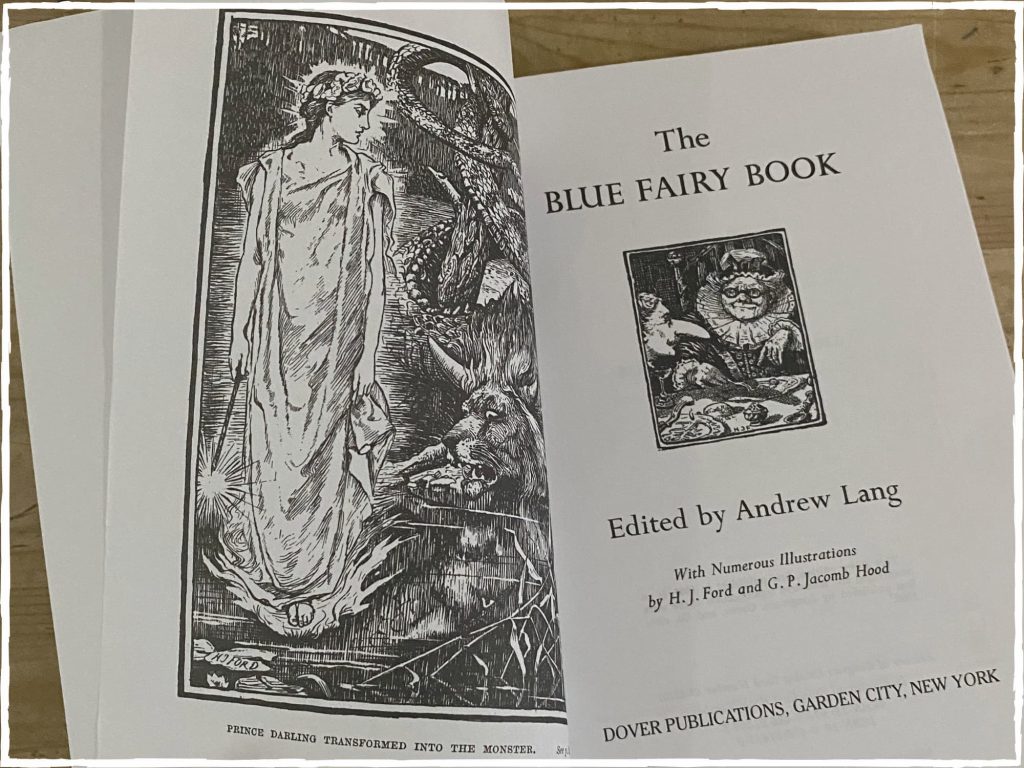
Charlotte Mason believed children should have “tales of the imagination,” filled with faraway places, brave adventures, and stories that are both enjoyable and meaningful.
The Blue Fairy Book by Andrew Lang
A beautiful introduction to classic fairy tales, bringing together well-known stories such as “The Sleeping Beauty,” “Cinderella,” and “Jack and the Beanstalk” in one volume. Filled with memorable characters, rich language, adventure, and timeless lessons, it is a wonderful collection to enjoy slowly throughout the kindergarten year.
Find it here: The Blue Fairy Book
Poetry and Nursery Rhymes
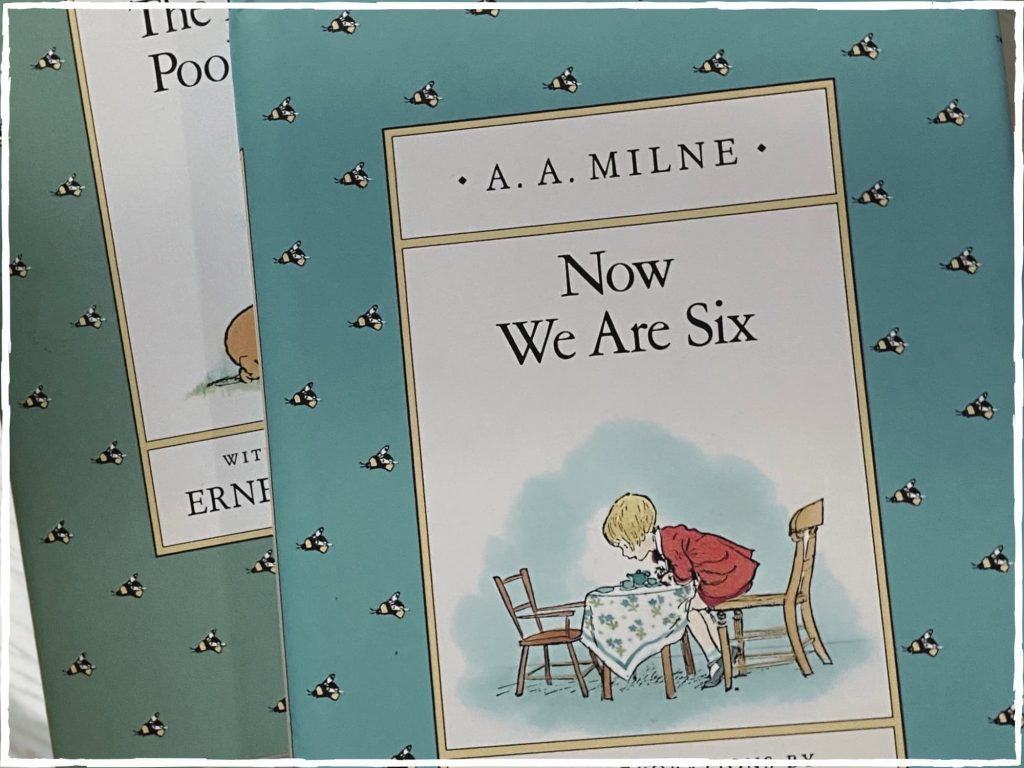
Now We Are Six by A.A. Milne
A charming collection of poems following Christopher Robin as he turns six, filled with the same gentle humor, imagination, and warmth found in the Pooh stories. From silly daydreams to the small thoughts and experiences of childhood, Milne’s playful verses are a lot of fun to read aloud. My children have always loved the sweetness and silliness of these poems, making them a lovely way to bring beautiful language and poetry into your kindergartener’s lessons.
Find it here: Now We Are Six
A Child’s Garden of Verses by Robert Louis Stevenson
A lovely introduction to poetry, Robert Louis Stevenson’s poems explore childhood, nature, and imagination in a way young children can easily enjoy. Favorites like The Swing, My Shadow, Bed in Summer, and Where Go the Boats? introduce rich language, memorable rhythms, and poems your children will want to hear again and again.
Find it here: A Child’s Garden of Verses
The Real Mother Goose by Blanche Fisher Wright
The Real Mother Goose is one of the most well-loved books in my home, a collection I grew up with and have now read to my own children countless times. Filled with familiar rhymes like Twinkle, Twinkle, Little Star, Humpty Dumpty, Mary Had a Little Lamb, and Jack and Jill, it helps young children build language, strengthen memory, and learn rhythm.
Find it here: The Real Mother Goose
Nature Stories and Animals

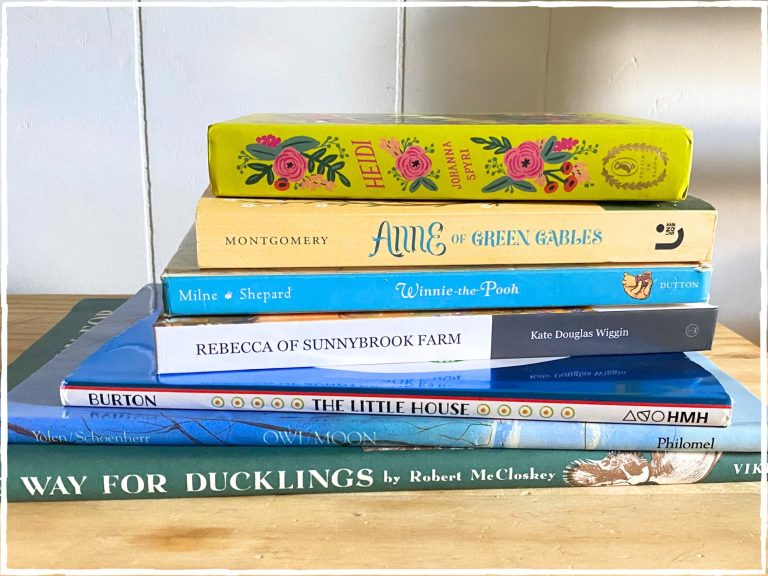
Make Way for Ducklings by Robert McCloskey
A true childhood favorite, Make Way for Ducklings follows Mr. and Mrs. Mallard as they search for a safe place to raise their family in the middle of Boston. Children love following the ducklings through the busy city, while the detailed illustrations offer plenty to notice about ducks, nesting, and family life. It is a wonderful living book for gently connecting story, nature study, and geography.
Learning tip: Look closely at the illustrations together and ask what your child notices about the ducks, the city, and the places the Mallards consider for their home.
Find it here: Make Way for Ducklings
The Story of Ferdinand by Munro Leaf
Ferdinand is happiest sitting quietly beneath his favorite cork tree and smelling the flowers, even while the other young bulls dream of fighting. My children have always loved his gentle nature and the simple humor of the story. It offers a memorable picture of contentment, individuality, and the quiet strength of remaining true to yourself.
Find it here: The Story of Ferdinand
Owl Moon by Jane Yolen
A young girl joins her father on a quiet winter walk through the woods in search of a great horned owl. The rich language, peaceful illustrations, and growing sense of anticipation make you feel as though you are walking through the snowy forest beside them. It is a beautiful living book for introducing owls, winter nature study, and the habit of careful observation.
Find it here: Owl Moon
Poky Little Puppy by Janette Sebring Lowrey
A well-loved classic for a reason, the repetition and gentle humor in this story make it one my children have often asked to hear again and again. As the curious puppy wanders away from his brothers and sisters, his small adventures offer a simple picture of curiosity, obedience, and natural consequences.
Learning tip: Ask your child to retell what the puppy discovered each time he wandered away and what happened when he returned home.
Find it here: Poky Little Puppy
Tale of Peter Rabbit by Beatrix Potter
Few stories will hold your young child’s attention quite like Peter Rabbit’s daring trip into Mr. McGregor’s garden. Beatrix Potter’s beautiful language, detailed illustrations, and strong knowledge of animals and gardens make this a true living book.
Find it here: Tale of Peter Rabbit
Little Bear by Else Homeland Miniarik
A timeless collection filled with loving family relationships, imaginative play, and the simple adventures of childhood. Whether Little Bear is making birthday soup, pretending to travel to the moon, or spending time with Mother Bear, Father Bear, and his friends, each story is warm, engaging, and easy to follow. The short chapters and beautiful language make this a perfect choice for reading aloud and early narration.
Find it here: Little Bear
Curious George by H.A. Rey
Curious George follows a clever little monkey whose curiosity leads him into one funny and unexpected adventure after another. My children have always loved wondering what George will do next, and each story gives plenty to talk about when curiosity turns into trouble, problem solving, and natural consequences.
Find it here: Curious George
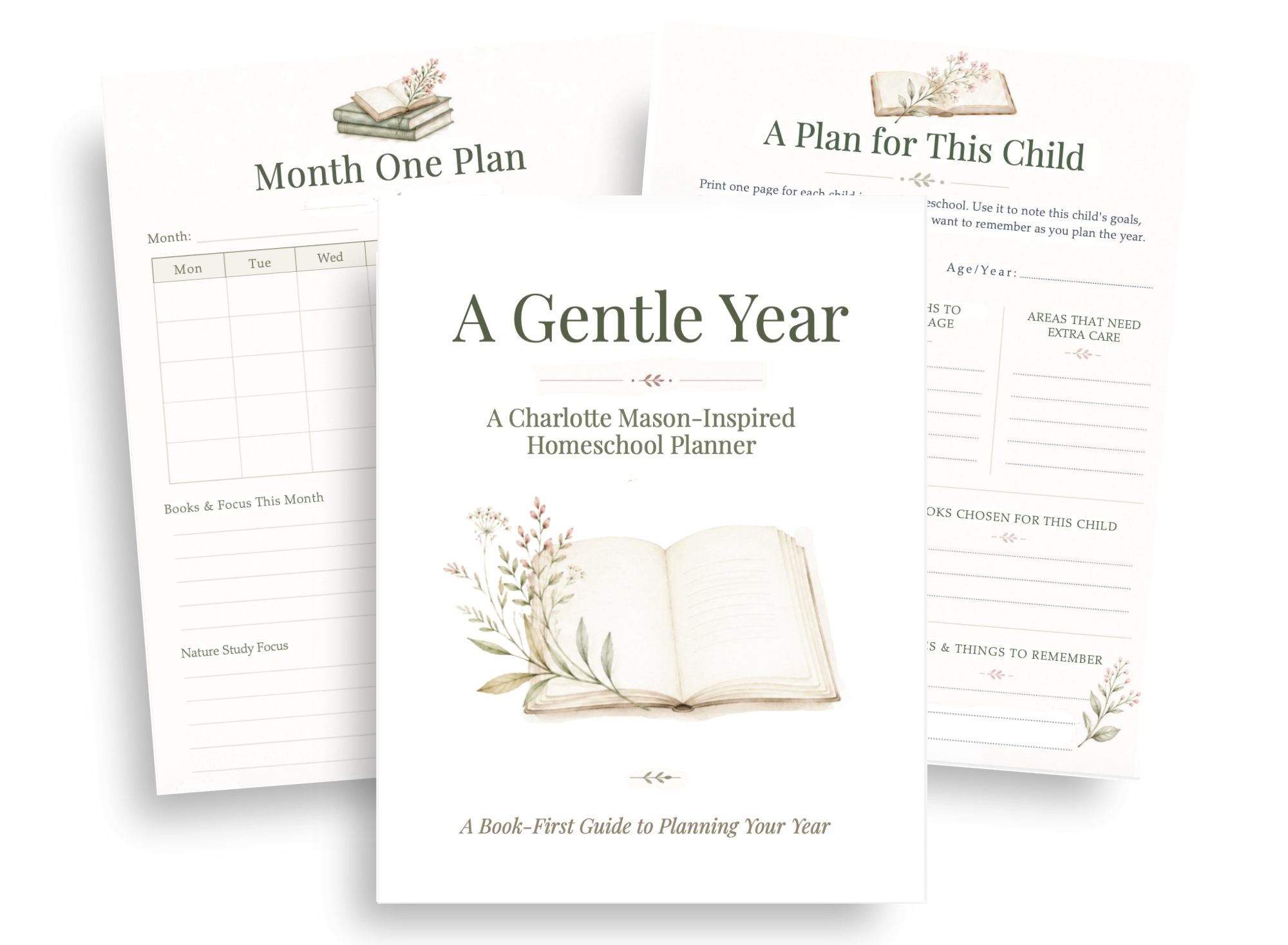
A Gentle Year Planner
You have already found the books. Now gather them into a full, book-first year. A Gentle Year Planner helps you organize your living books, subjects, and terms with calm and clarity, without having to begin from a blank page.
Plan My Gentle Year →Velveteen Rabbit by Margery Williams
One of my all-time favorite classic stories to read aloud, The Velveteen Rabbit follows a stuffed rabbit who hopes to become real through the love of a young boy. The story offers an age-appropriate look at attachment, change, and what it means to be loved.
Find it here: Velveteen Rabbit
Thornton Burgess’ various animal stories
Thornton Burgess’ animal stories are some of mine and my children’s favorite living books for nature study. Following the adventures of Peter Rabbit and his animal friends, your children will naturally learn where animals live, what they eat, and how they behave. They are perfect for helping your children connect the animals in the stories with those they notice on their own nature walks.
Learning tip: Choose one animal from the story to look for in a field guide, then ask your child what they learned about how that animal lives.
Find them here: Thornton Burgess’ animal stories
Shy Little Kitten by Cathleen Schurr
A shy little kitten becomes separated from her brothers and sisters and begins exploring a world filled with unfamiliar animals and new experiences. As she meets new animal friends and finds her way home, she slowly grows braver. A gentle story about curiosity, courage, and friendship as the young kitten finds her way home.
Find it here: Shy Little Kitten
The Story about Ping by Marjorie Flack
Ping is a little duck who lives with his large family on a boat along the Yangtze River. When he hides to avoid the consequences of returning late, he is left behind and must find his way back. My children have always enjoyed following Ping’s adventure, and the story is a very good way to introduces geography, courage, and the importance of learning from mistakes.
Learning tip: Help your child locate the Yangtze River on a map or globe, then trace Ping’s journey through the story.
Find it here: The Story about Ping
The Very Hungry Caterpillar by Eric Carle
The Very Hungry Caterpillar is a fun introduction to the life cycle of a butterfly. As the caterpillar eats, grows, forms a chrysalis, and finally becomes a butterfly, your child is also introduced to counting, sequencing, and the days of the week through a story that has always been a childhood favorite.
Learning tip: Discuss the life cycle of a butterfly, from caterpillar to chrysalis to butterfly, and have your child put the stages in order.
Find it here: The Very Hungry Caterpillar
Classic Literature and Picture Books

Goodnight Moon by Margaret Wise Brown
In Goodnight Moon, a small bunny settles in for bedtime by quietly saying goodnight to everything in his room. The gentle rhythm and repeating words make it calm and comforting, while the changing illustrations give your child new little details to discover with every reading.
Find it here: Goodnight Moon
Blueberries for Sal by Robert McCloskey
Sal and her mother are picking blueberries on one side of the hill while a mother bear and her cub are doing the same nearby. The mix-up that follows is so sweet and funny. My children have always loved the familiar kuplink, kuplank, kuplunk of the berries falling into the pail, and the story makes for a really enjoyable read aloud.
Learning tip: Discuss the kinds of foods bears eat, such as berries, fish, insects, and plants, and how their diet changes depending on the season.
Find it here: Blueberries for Sal
Where the Wild Things Are by Maurice Sendak
After being sent to his room, Max sails away in his imagination to a land filled with wild things. The bold illustrations, make-believe adventure, and repeated lines make it especially fun to read aloud. This was always one of my son’s favorite stories, and he could hardly wait to shout, “Let the wild rumpus start!” along with me. Beneath all the excitement, Max’s journey ends perfectly with him returning to the comfort of home.
Find it here:Where the Wild Things Are
Harold and the Purple Crayon by Crockett Johnson
Harold sets out on an adventure with nothing but his purple crayon, drawing each new part of the story as he goes. His simple pictures and clever solutions make it especially fun to follow, while leaving plenty of room for your child’s own imagination. It is the perfect story to inspire your child to turn their own drawings into a story of their own.
Find it here: Harold and the Purple Crayon
Complete Tales of Winnie-the-Pooh by A.A. Milne
Winnie the Pooh, Christopher Robin, Piglet, Eeyore, and the rest of the Hundred Acre Wood share all sorts of small adventures together. The gentle humor, memorable characters, and playful language make these stories so enjoyable to read aloud. The chapters are just the right length for beginning narration, and before long, each character feels like a familiar friend.
Find it here: Complete Tales of Winnie-the-Pooh
Madeline by Ludwig Bemelmans
Madeline may be the smallest of the twelve little girls, but she is brave, curious, and always ready for an adventure. The steady rhyme makes the story fun to read aloud, while the illustrations introduce your child to Paris, its buildings, and a way of life that feels different from their own.
Learning tip: Help your child locate Paris on a map or globe, then look for the Eiffel Tower and other landmarks in the illustrations.
Find it here: Madeline
The Little House by Virginia Lee Burton
A little house in the countryside watches as roads, buildings, and a busy city slowly grow up around her. The detailed illustrations make it easy to notice the passing seasons and all the changes taking place. It is a great way to gently discuss how a familiar place can change over time.
Find it here: The Little House
Corduroy by Don Freeman
Corduroy is a small bear in a department store who sets out one night to find his missing button. His search leads him through parts of the store he has never seen before, but the best part is Lisa choosing to bring him home. My children have always loved that she sees something special in Corduroy just as he is.
Find it here: Corduroy
Mike Mulligan and His Steam Shovel by Virginia Lee Burton
Mike Mulligan and his steam shovel, Mary Anne, have worked faithfully together for many years. When newer machines begin taking their place, they accept one more difficult job to show what they can still do. The detailed machinery, growing suspense, and clever solution make this a particularly fun read aloud for children who particularly enjoy trucks and machines.
Find it here: Mike Mulligan and His Steam Shovel
Katy and the Big Snow by Virginia Lee Burton
Katy is a strong snowplow who keeps working when a deep snowfall brings the entire city to a stop. The maplike illustrations let your child follow her route as she clears the way for doctors, firefighters, mail trucks, and others who need her help. It is a wonderful early introduction to maps, community helpers, and how the parts of a city work together.
Find it here: Katy and the Big Snow
The Little Engine That Could by Watty Piper
When a train filled with toys and food cannot make it over the mountain, a small blue engine agrees to help. My children love to walk around chanting, “I think I can, I think I can,” as the little engine slowly climbs the hill. Her willingness to help and determination to finish a difficult job give a simple, memorable example of perseverance.
Find it here: The Little Engine That Could
The Mitten by Jan Brett
When Nicki loses his white mitten in the snow, one woodland animal after another crawls inside to keep warm. This charming story is based on a traditional Ukrainian folk tale, retold and beautifully illustrated by Jan Brett. It is so fun to watch the mitten grow more crowded with each page, while the detailed borders give little hints about which animal is coming next.
Find it here: The Mitten
The Snowy Day by Ezra Jack Keats
The perfect story for the first snow day of the year, Peter wakes to find his neighborhood covered in snow and spends the day making tracks, building a snowman, and trying out everything the fresh snow allows.
Find it here: The Snowy Day
How to Use this Book List with Your Kindergartener

Here are some of the best ways to incorporate this list of books into your kindergarten curriculum:
- Read-Aloud Time: Reading aloud is such an important aspect of the Charlotte Mason approach. Enjoy daily read-aloud sessions, bringing characters and stories to life.
- Nature Walks and Observations: If you choose a nature story or animal story from the list, it is so much fun to take your little one on a nature walk to look for the animals and topics you just read about. It helps to bring the book to life while exploring the real world around us.
- Narration Practice: After reading a book, ask your child to tell you the story in their own words. This is such an important part of your child’s education. It is also a lot of fun because it helps your child get better at their communication skills, comprehension skills, and expressing their thoughts clearly. And what young child doesn’t like telling stories?
- Art and Handicrafts: Do fun art and craft activities related to the stories. Not only does this allow your child some extra time for creativity it also helps to develop fine motor skills.
- Encouraging Independent Reading: While your child may not be ready to read just yet, I love to encourage my children to look at the pictures and retell the story or even make up their own. It is also really fun to have your younger children tell these stories to their younger or older siblings, if possible. Think of it as a creative growing time.
- Keep It Easy and Relaxed: This is my favorite tip (and the one that is most often forgotten)! Our learning journey isn’t about rushing through things. It is about taking our time, enjoying every moment, and allowing our children to soak up all the interesting things they are learning.
- Observing Your Child’s Interests: If your child seems really interested in a specific topic, see if you can find more living books or information about the topic.
- Cultivating a Love for Learning: Above everything else, it is your job to help your children fall in love with learning and exploring. We’re on a mission to keep curiosity alive and make reading something that your child will love for the rest of their lives!
Bringing Living Books to Your Charlotte Mason Kindergarten
Living books belong at the heart of a gentle and meaningful kindergarten year. Read slowly, return to your favorites often, and give your child time to enjoy the language, characters, and ideas within each story. These simple moments of reading together help build a lasting love for books and learning.
For more help planning your year, explore my Complete Charlotte Mason Kindergarten Guide, or browse my full collection of living book lists for every stage of your homeschool.