
Fall Nature Study Made Simple: A Charlotte Mason-Inspired Guide

There’s something about fall that always feels like a fresh start in our homeschool. The air turns crisp, the light grows golden, and our days begin to settle into a steadier rhythm. Even though we spend time outdoors year-round, autumn seems to make us notice a little more.
Charlotte Mason placed such value on these quiet, firsthand experiences in nature. Fall nature study can be beautifully simple: a little time outdoors, a habit of paying attention, and a few gentle ideas to guide the way.
In this post, I’m sharing some of our favorite fall nature study themes, gentle journaling ideas, and living book pairings to help you make the most of the season. You can also pair these ideas with my Fall Living Books List or use the Fall Nature Study Notebook if you’d like a simple place for your children to record what they notice.
This post may contain carefully chosen affiliate links to help support our homeschooling journey. Thank you for supporting my family through your purchases! You can read my full affiliate disclosure policy here.
Changing Leaves & Leaf Rubbings
The changing leaves are one of the most visible and beautiful signs of fall. Whether you’re walking through the woods or simply stepping outside your front door, there is so much to notice as the colors deepen, textures change, and leaves begin drifting to the ground.
In my homeschool, this is usually one of the first fall nature activities my children gravitate toward on their own. We keep a basket by the door just for leaves, and it fills up quickly this time of year.
Simple Activities
- Collect leaves in a variety of colors, shapes, and sizes.
- Sort them by shape, size, color, or tree type.
- Create leaf rubbings with crayons or colored pencils.
- Press a few favorites to add to your nature journal.
Nature Journal Ideas
- Sketch or make rubbings of favorite leaves, adding labels if known.
- Note color, size, texture, or changes you notice over time.
- Record your child’s questions, such as “Why do some leaves turn red?” or “Why do some trees stay green?”
Quick Extension
Choose one tree to observe throughout the season. Visit it each week and notice the changes from the first hint of color to the last bare branches.
Living Book Pairings
- Fletcher and the Falling Leaves by Julia Rawlinson – A young fox watches his favorite tree lose its leaves for the first time and tries to understand what is happening. The changing leaves, woodland setting, and Fletcher’s concern for the tree make this such a sweet story for early fall, especially when your children are beginning to notice the season changing outside
- Autumn Story by Jill Barklem – Part of the beloved Brambly Hedge series, this cozy woodland story is filled with tiny autumn details, from changing leaves and berries to harvest preparations and little homes tucked into the hedgerows. The detailed illustrations give your children so much to look at and make it especially nice to enjoy slowly during fall reading or nature study.
Autumn Seeds & Acorns

Fall brings all kinds of little discoveries—acorns scattered beneath the trees, seed pods hidden in the grass, pinecones along the trail, and maple keys spinning to the ground. My children usually notice them right away, and before I know it, their pockets are full and little collections have started appearing all over the house.
This is such a good time to slow down and take a closer look. Let your children gather whatever catches their attention and notice the shapes, textures, colors, and all the different ways seeds are designed to travel. Charlotte Mason placed such value on observation first, allowing curiosity and understanding to grow from what children see for themselves.
Simple Activities
- Go on a seed hunt in your yard or along a favorite trail.
- Compare different shapes and structures and notice how each one travels.
- Drop a pinecone and a winged seed and compare how they move.
- Sort your finds by size, texture, shape, or type.
Nature Journal Ideas
- Sketch and label a few collected seeds.
- Record where each one was found and how it may travel.
- Note colors, textures, shapes, or other details that stand out.
Quick Extension
Choose one seed, such as an acorn or maple key, and learn a little more about how it becomes a new plant or tree. You might even plant one and watch for changes over time.
Living Book Pairings
- A Seed Is Sleepy by Dianna Hutts Aston – Beautiful illustrations and poetic language introduce children to the remarkable variety of seeds, from the tiniest seeds to those that float, spin, and travel. It pairs especially well with a fall seed collection because children can begin comparing what they find outdoors with the seeds they see in the book.
- From Seed to Pumpkin by Wendy Pfeffer – This gentle look at the pumpkin life cycle follows the plant from seed through vines, blossoms, and finally a ripe pumpkin. It is especially nice in the fall when your children can connect what they are reading with pumpkins, seeds, and vines they may already be seeing around them.
Observing Animal Behavior in Autumn
Autumn is a busy time of preparation for animals. Squirrels are darting up into trees, birds are gathering in flocks overhead, and insects begin to vanish as tAutumn is such an interesting time to watch animals. Squirrels seem busier than ever, birds begin gathering in flocks overhead, and insects slowly disappear as the air turns cooler.
Some of our best nature study moments have come from simply stopping to watch what is happening around us. A squirrel carrying an acorn, a group of birds moving across the sky, or the sudden quiet where summer insects used to be can give children plenty to notice.
Encourage your children to begin watching for patterns: what animals are doing, when they are most active, what they are carrying or eating, and how those habits begin to change as fall moves along.
Simple Activities
- Watch squirrels and notice what they are carrying or where they are going.
- Look and listen for flocks of birds, especially in the morning or evening.
- Return to the same outdoor spot each week and notice changes in animal activity.
- Pay attention to which insects are still around and which seem to have disappeared.
Nature Journal Ideas
- Sketch an animal you observed and add a few notes about what it was doing.
- Record the time of day, weather, or anything else that may have affected its behavior.
- Write down questions your children wonder about, such as “Why do squirrels bury nuts?” or “Where do butterflies go in winter?”
Quick Extension
Choose a quiet observation spot: a bench, picnic blanket, fallen log, or even a place in your own backyard. Sit quietly for 10–15 minutes and keep track of every animal you see or hear. Come back the following week and compare what has changed.
Living Book Pairings
- Home in the Woods by Eliza Wheeler – ased on the author’s grandmother’s childhood during the Great Depression, this beautifully illustrated story follows a family making a home in the woods through the changing seasons. The woodland setting, glimpses of animals, and close connection to the land make it a beautiful companion to fall nature study, while the story also brings in family life, resilience, and the preparations that come with the colder months.
Mushrooms, Moss & the Forest Floor
As the weather cools and the air turns damp, the forest floor begins to change. Mushrooms start popping up, moss becomes softer and greener, and fallen leaves are now underfoot.
We try not to touch mushrooms, but observing them has led to some of our most focused nature journaling. Some days, we revisit the same one for several days in a row just to see if it’s changed.
Simple Activities
- Look for mushrooms, moss, or lichen after a rainy day.
- Compare how moss looks and feels in sunny, shady, dry, or damp places.
- Sketch mushrooms without touching them, or take a photo to identify later at home.
- Use a magnifying glass to look closely at tree bark, fallen logs, moss, or other tiny details on the forest floor.
Nature Journal Ideas
- Draw or watercolor a mushroom, moss patch, or bit of lichen.
- Record color, texture, shape, and where it was growing.
- Note any changes you see over time, such as whether a mushroom lasts more than a day or how moss changes as it dries.
Quick Extension
Choose one small mushroom or patch of moss to observe over several days. Have your child describe or sketch what they notice each time, paying attention to color, shape, texture, and any changes.
Living Book Pairings
- Mushroom in the Rain by Mirra Ginsburg – This gentle story follows a group of small animals who find shelter beneath a mushroom during a rainstorm. The simple woodland setting and close-up look at a mushroom make it a sweet companion to a damp fall nature walk.
- Fall Walk by Virginia Brimhall Snow – A beautifully illustrated nature walk through the season, with leaves, seeds, moss, mushrooms, and other details children may notice outdoors. It works especially well before or after a fall walk, giving your children plenty of little things to look for along the way.
Observing Autumn Weather
As fall sets in, the sky and weather begins to change. The sunlight shifts, sAs fall settles in, even familiar places begin to feel different. The sunlight shifts, shadows stretch a little longer, mornings become cooler, and breezy days send leaves tumbling across the ground.
I’ve found that simply stepping outside around the same time each day, before lessons or after lunch, helps us notice these changes much more easily. Charlotte Mason valued regular weather observation as part of knowing the world around us, and fall gives children so many small changes to watch from one week to the next.
Notice the sky before rain, the way clouds move on a windy day, or how the afternoon light falls differently than it did a few weeks earlier. Children may also begin to see connections between the weather and what is happening around them, like the way leaves move in the wind, birds gather before a change in weather, or frost appears on colder mornings.
Simple Activities
- Step outside around the same time each day and notice what has changed.
- Watch and sketch clouds, noticing their shapes and how quickly they move.
- Look for signs of wind in swaying branches, drifting seeds, and falling leaves.
- Compare a warm autumn afternoon with a crisp morning after the temperature drops.
Nature Journal Ideas
- Sketch the clouds, an autumn sunset, or trees moving in the wind.
- Record the temperature, wind, or other weather details your child finds interesting.
- Notice how the color and direction of the light change as the season moves along.
Quick Extension
Keep a simple weather record for one week. Each day, your child can draw the sky and add a short sentence about something they noticed, like the first chilly morning, a windy afternoon, heavy clouds, or perhaps the first frost.
Living Book Pairings:
- Goodbye Summer, Hello Autumn by Kennard Pak – A young girl walks through her neighborhood as summer begins to give way to fall, noticing the changing air, plants, animals, and weather along the way. The gentle illustrations make it a beautiful book to read at the beginning of the season before heading outdoors to look for the first signs of autumn yourselves.
- In November by Cynthia Rylant – The beautiful, poetic language and gorgeous illustrations capture the quieter side of late fall, when the air grows colder, animals prepare for winter, and the landscape begins to settle. It is especially nice for helping children notice that autumn has its own distinct stages rather than feeling like one long season.
Apple Orchards & Pumpkin Patches

Apple and pumpkin picking are some of my family’s favorite fall outings. There is something about walking through rows of apple trees or wandering a pumpkin patch with your children, filling baskets and noticing all the little details of the season, that makes fall feel especially memorable.
These outings are full of fun and family memories, but they also give children so much to observe. Charlotte Mason placed great value on real experiences with the natural world, and orchards and farms offer a simple way to see how food grows, how plants change through the season, and what happens at harvest time.
While you are there, take your time. Look closely at the way the pumpkin vines spread, how apples hang from the branches, or how the leaves and stems change as the season moves along. Let your children notice the colors, textures, smells, and sounds around them.
Simple Activities
- Look closely at apple trees or pumpkin vines and notice leaves, stems, shapes, and textures.
- Compare the size, color, or weight of the apples or pumpkins your children choose.
- Watch the harvesting or sorting process if you are visiting a working farm.
- Talk about what happens after harvest, such as storage, cooking, composting, or seed saving.
Nature Journal Ideas
- Sketch an apple tree, pumpkin vine, or one favorite apple or pumpkin.
- Record color, smell, weight, texture, or other details your child notices.
- Draw the inside of an apple or pumpkin after cutting it open.
- Add a few seeds to the journal or label them for a small seed collection.
Quick Extension
After your outing, cut open an apple or pumpkin together and take a closer look inside. Let your child sketch the seeds, core, or pulp, and save a few seeds to dry and observe later.ournal or seed collection.
Living Book Pairings
- Pumpkin Jack by Will Hubbell – This story follows a carved pumpkin through the seasons as it slowly decomposes and eventually gives way to new growth. It is a wonderful book to pair with a pumpkin patch visit because it helps children see what happens beyond harvest and connects one familiar fall pumpkin to the larger cycle of the seasons.
- Apples by Gail Gibbons – From blossoms and different apple varieties to harvesting and apple history, this book gives children a fuller look at one of fall’s most familiar fruits. It is especially fun to read before or after apple picking, when they can connect what they have read with the trees, fruit, and harvest they experienced for themselves.
Tracking the Progression of Fall

One of my favorite parts of fall nature study is watching the season change little by little. Early September can still feel almost like summer, while late November looks and sounds completely different.
We like to return to the same familiar places throughout the season, whether that is a favorite tree, our backyard, or a trail we visit often. The more often we go back, the more the children begin to notice on their own: a tree that was green the week before is turning red, acorns are covering the ground, or the birds we heard earlier in the season have become much quieter.
Making a habit of returning to the same place helps those small changes stand out. Over time, their nature journal entries often become more detailed simply because they have learned what to look for.
Early Fall (September):
- First hints of color on trees
- Acorns and seed pods appearing
- Warm days, cooler mornings
- Butterflies still active; birds still singing
Mid-Fall (October):
- Leaves at peak color, then falling
- Increased squirrel and bird activity
- Mushrooms appearing after rain
- More bird migration overhead
Late Fall (November):
- Bare branches and crunching leaves
- Fewer insects and birds; quieter trails
- Dormant gardens and gray skies
- Longer shadows and vivid sunsets
What to Record in Nature Journals:
- Weekly sketches of the same tree, plant, or outdoor view
- Notes on temperature, light, and animal activity
- Simple comparisons: “Last week, this tree had red leaves. Now they’re gone.”
Quick Extension Idea:
Create a simple “Signs of Fall” page in your nature journal. Add one new observation each week, such as something that changed, disappeared, or newly appeared as the season moved along.
Living Book Tie-In:
- Ox-Cart Man by Donald Hall – This gentle story follows a New England family through the rhythm of an entire year, with harvest work, changing weather, and the steady passing of the seasons throughout the story. It pairs especially well with tracking the progression of fall because children can see how closely daily life once followed the natural rhythm of the year.
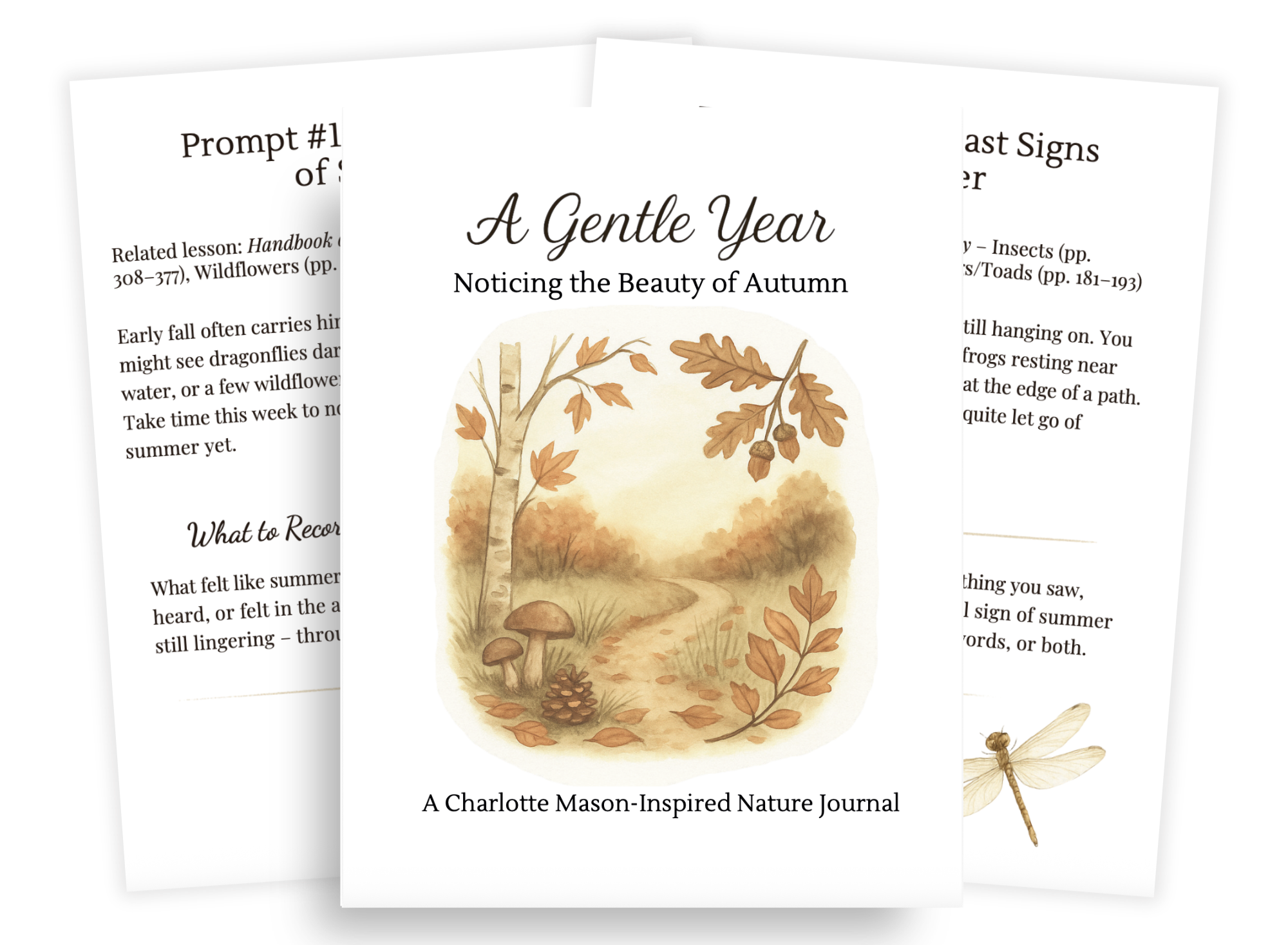
Fall Nature Study Notebook
Ready to take these simple fall nature study ideas a little further? Thoughtful prompts give your children a clear place to observe, sketch, and record the season, helping you build a more consistent and meaningful nature study without extra planning.
Explore the Fall Nature Study Notebook →Including All Ages in Your Fall Nature Study
One of the things I love most about nature study is how naturally it can include everyone. Whether you are homeschooling one child or a large family like mine, fall offers something for every age, from little ones gathering leaves to older children sketching birds, tracking weather, or following an interest more deeply.
You do not need a separate activity for every child. One nature walk can look completely different for each of them. In our homeschool, everyone may be walking together while one child sketches a mushroom, another collects seeds, and another is simply running through the leaves. Each child can meet the season at his or her own level.
For Preschoolers (Ages 3–5)
- Focus on colors, smells, textures, and sounds.
- Let them collect and carry leaves, acorns, pinecones, or other little treasures.
- Keep outings short and follow their pace.
- Use simple questions such as, “What do you hear?” or “Which leaf do you like best?”
For Early Elementary (Ages 6–9)
- Encourage closer observation of things like leaf veins, cloud shapes, or animal activity.
- Let them add simple labels to sketches in their nature journals.
- Introduce field guides gently when they are interested in identifying something.
- Compare what they notice from one week to the next.
For Upper Elementary & Middle Grades (Ages 10–13)
- Encourage more detailed sketches and written observations.
- Look for patterns in weather, plant changes, migration, or animal behavior.
- Let their questions lead to a little extra reading or research.
- Offer tools such as a magnifying glass, compass, thermometer, or field guide when useful.
For High Schoolers (13+)
- Give them room to follow an area of nature study that genuinely interests them, such as birdwatching, weather, nature photography, botany, or field sketching.
- Encourage longer-term observations of one tree, habitat, species, or seasonal change.
- Let nature study connect naturally with science, literature, art, or writing.
- Encourage more detailed field notes, sketches, or independent reading when they want to go deeper.
Making the Most of Your Fall Nature Study

Fall nature study can be as simple as returning to the same favorite places, noticing what has changed, and giving your children time to wonder about what they find.
Some days may lead to detailed nature journal pages, while others are simply spent gathering leaves, watching squirrels, or walking through the woods together. Both become part of knowing the season more closely.
I hope these ideas help you enjoy the beauty of fall together and make a few meaningful nature study memories along the way.


