Charlotte Mason Copywork: How to Use It in Your Homeschool
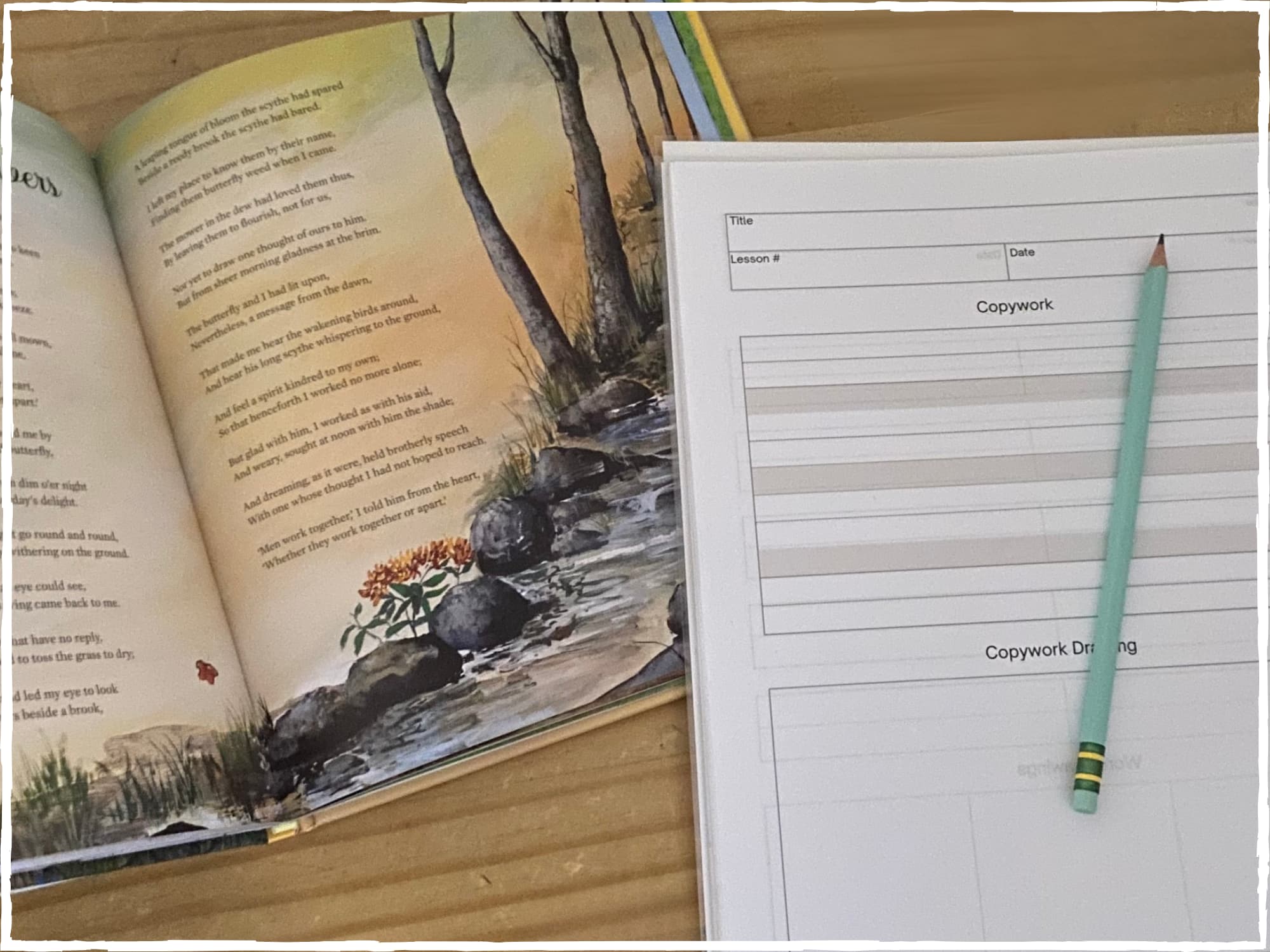
Copywork is an important part of Charlotte Mason language arts because it gives children regular practice with handwriting, spelling, punctuation, and well-written language, all through just a few carefully chosen words or sentences.
When you are first getting started, though, it can be easy to wonder what copywork is actually supposed to look like. What should your child copy? How much is enough? And is simply copying a sentence really doing anything more than practicing handwriting?
When I first began using Charlotte Mason’s methods, I had many of those same questions. Over the years, copywork has become one of the easiest and most natural parts of our language arts lessons. Instead of filling pages with disconnected handwriting exercises, my children copy short, meaningful passages from the living books, poetry, and Scripture we are already reading.
It takes only a few minutes, but gives children regular practice with so many important language skills at once. In this guide, I’ll walk you through how we use Charlotte Mason copywork in our homeschool, what makes a good passage, how much to assign, and how copywork fits naturally with dictation and other language arts lessons.
This post may contain carefully chosen affiliate links to help support our homeschooling journey. Thank you for supporting my family through your purchases! You can read my full affiliate disclosure policy here.
What Is Charlotte Mason Copywork?
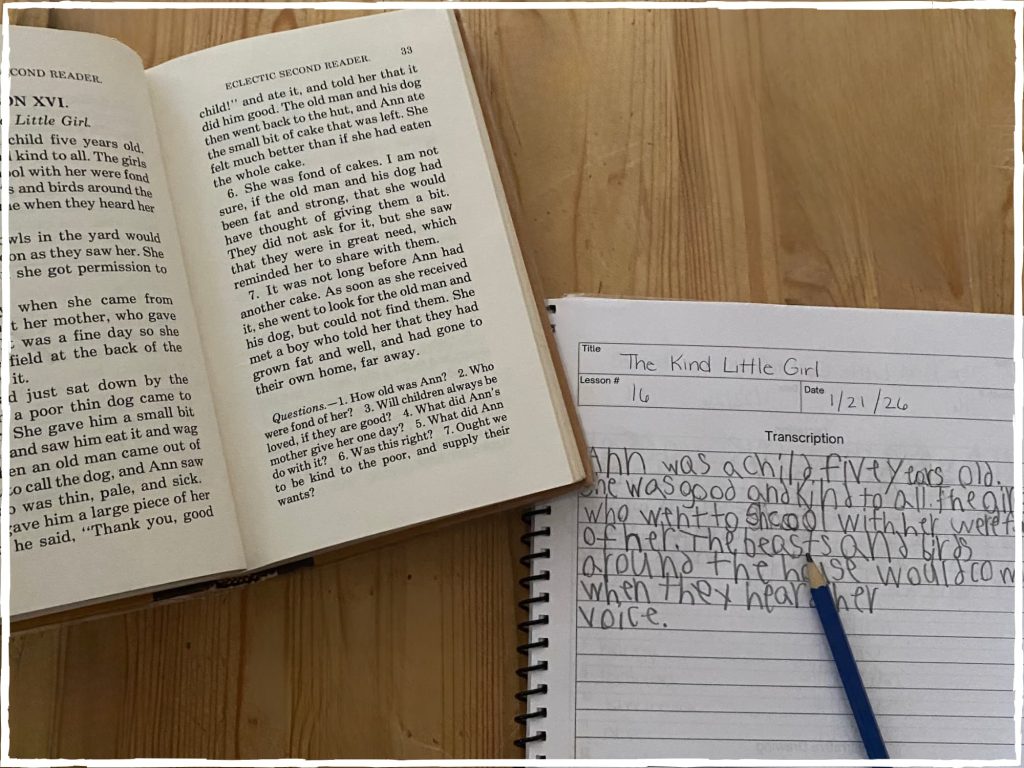
Copywork is simply the practice of having your child carefully copy a short piece of beautiful language. It might be a sentence from a living book, a line of poetry, a Scripture verse, or another meaningful passage you are currently reading together.
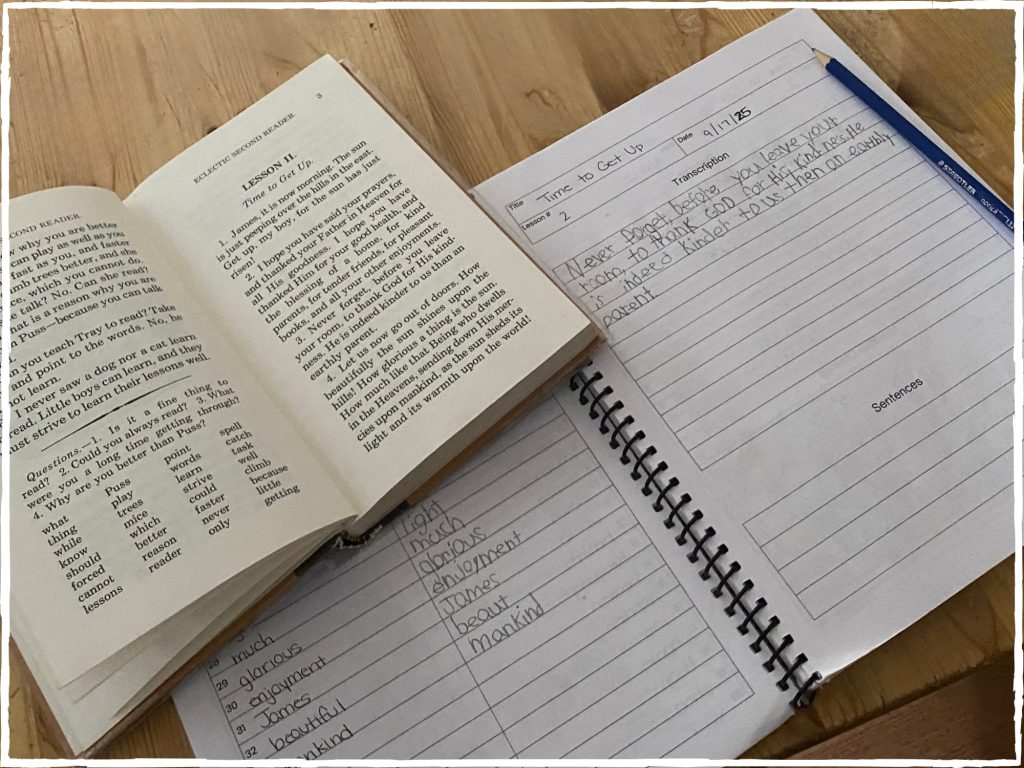
In my homeschool, I use copywork for the earlier stage, when I provide the passage for my child to copy. As writing becomes more independent, we move into transcription, where my children copy the passage directly from the book. Charlotte Mason often used the term transcription more broadly, but I have found this distinction helpful as children grow in confidence and independence with their writing.
At either stage, the value comes from the careful attention your child gives to the passage. While your child is practicing handwriting, they are also seeing correct spelling, punctuation, capitalization, and sentence structure in a natural way. That is what makes copywork so valuable. One short passage can gently strengthen several language arts skills at once without turning them into separate lessons.
A beginning writer may copy only a few words, while a more experienced student may work with several sentences, a paragraph, or a longer passage suited to their ability. What matters most is that the work is done slowly and carefully, with attention to the words and language being copied.
How to Do Charlotte Mason Copywork
Once your child is ready for copywork, keep the lesson short and give them one clear passage to focus on. A few simple habits can make these lessons much more valuable.
Choose and prepare the passage ahead of time. Look for something your child can comfortably copy within the time you have set aside. A beautiful sentence from the day’s reading, a few lines of poetry, or a familiar Scripture verse are all good choices. You can also be intentional about choosing passages that include a spelling pattern, punctuation mark, or bit of grammar your child is currently working on. The idea is not to drill the skill in isolation, but to let your child meet it naturally in meaningful language.
Have your child look at the passage before beginning. Take a moment to notice unfamiliar words, capital letters, punctuation, or anything that might be easy to miss. This little bit of observation is part of the lesson, not just preparation for it.
Encourage careful work from the beginning. I would much rather have my child copy one sentence neatly and attentively than hurry through an entire paragraph. Choose an amount your child can manage well, keeping the lesson short enough that careful attention can be maintained from beginning to end.
Let your child check their own work. When the passage is finished, have them compare it with the original. They can look for a missing capital, punctuation mark, or misspelled word and make the correction themselves. This helps copywork become an exercise in noticing rather than simply copying words onto paper.
When the passage is well chosen and the amount fits your child, even a few focused minutes of copywork can be a meaningful part of language arts.
A Simple Charlotte Mason Copywork Example
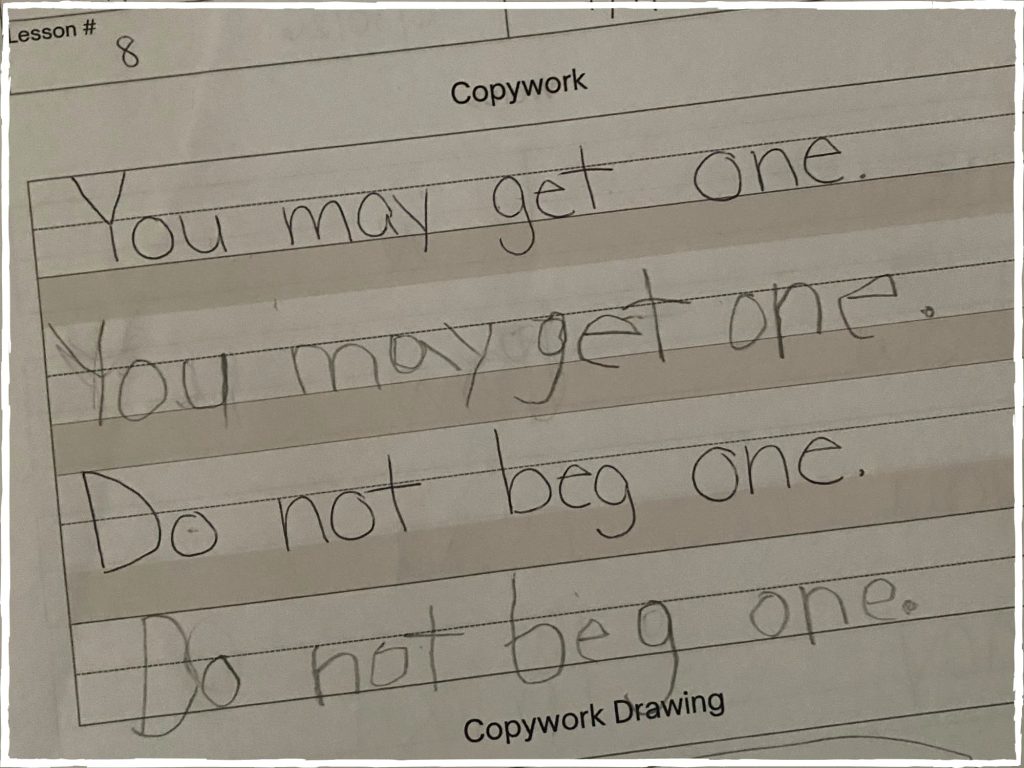
If we were studying Robert Louis Stevenson for poetry, I might choose these lines from A Child’s Garden of Verses:
“The world is so full of a number of things,
I’m sure we should all be as happy as kings.”
Before copying, I would have my child look over the passage and notice the comma, the contraction I’m, and the way Stevenson compares being happy to being “as happy as kings.” For my younger children, I would write out the lines for them to copy. And then as they become more confident and independent, they can begin copying the passage directly from the book as transcription.
What Should Your Child Use for Copywork?
One of the easiest ways to choose copywork is to use the books, poetry, Scripture, and readers that are part of your homeschool. Each one offers something a little different, so the best choice often depends on what your child is studying and what would be most helpful to focus on.
Living books are a wonderful choice when you want copywork to connect with a story or subject your child is reading. Look for a sentence with vivid description, memorable wording, or interesting dialogue. A passage like this gives your child time to notice how an author uses words and puts sentences together. If you are looking for living books to use in your homeschool, you can browse all of my book lists here.
Poetry gives your child a chance to notice rhythm, phrasing, punctuation, and the way a poet uses language. A line or short stanza from the poet you are studying for the term helps them become more familiar with that poet’s style and wording.
Scripture works especially well when you want copywork to support Bible reading or Scripture memorization. Choosing a verse you are focusing on gives your child another opportunity to consider the words and meaning while copying them carefully.
Readers are helpful when you want copywork to stay closely matched to your child’s reading ability. A passage from the McGuffey Readers, Pathway Readers, or another well-written reader gives practice with familiar vocabulary and sentence patterns while connecting reading and handwriting. If you would like to see examples of how we use the McGuffey Readers in our homeschool, I share more about them here.
I always try to let my child’s current needs guide the passages that I choose. So, if I have been working on quotation marks, commas, capitalization, or a spelling pattern, I will look for a passage that includes it naturally.
A good place to begin is simply to ask: What are we focusing on right now, and which passage would help my child notice and understand it more clearly?
How Much Copywork Should Your Child Do?
Charlotte Mason did not give a set number of sentences or lines that every child should copy. Instead, she emphasized short writing lessons and careful work.
“Not more than ten minutes or a quarter of an hour should be given to the early writing-lessons. If they are longer the children get tired and slovenly.” — Charlotte Mason, Home Education
The amount your child copies within that time will naturally depend on handwriting ability and experience. A beginning writer may only manage a few words, while a more experienced student may comfortably copy several sentences or a longer passage.
As writing becomes easier and more fluent, the amount can gradually increase while the lesson itself remains short.
How Copywork Connects With Dictation
Copywork also works naturally with prepared dictation. In our homeschool, I often use the same passage for both. One day, my child copies it carefully and notices the spelling, punctuation, and sentence structure. The next day, we return to the passage for dictation.
Using the same selection gives your child time to become familiar with the words before writing them more independently and keeps both lessons connected to meaningful language.
Make Living Books Your Language Arts Lessons
One of the things I love most about this approach is that you do not need to leave your living books behind when it is time for language arts. The books your child is already reading can become the starting point for copywork, narration, spelling, grammar, and dictation.
The harder part is knowing how to pull all of those pieces together without spending your own time searching for passages, deciding what to teach, or piecing together several different resources.
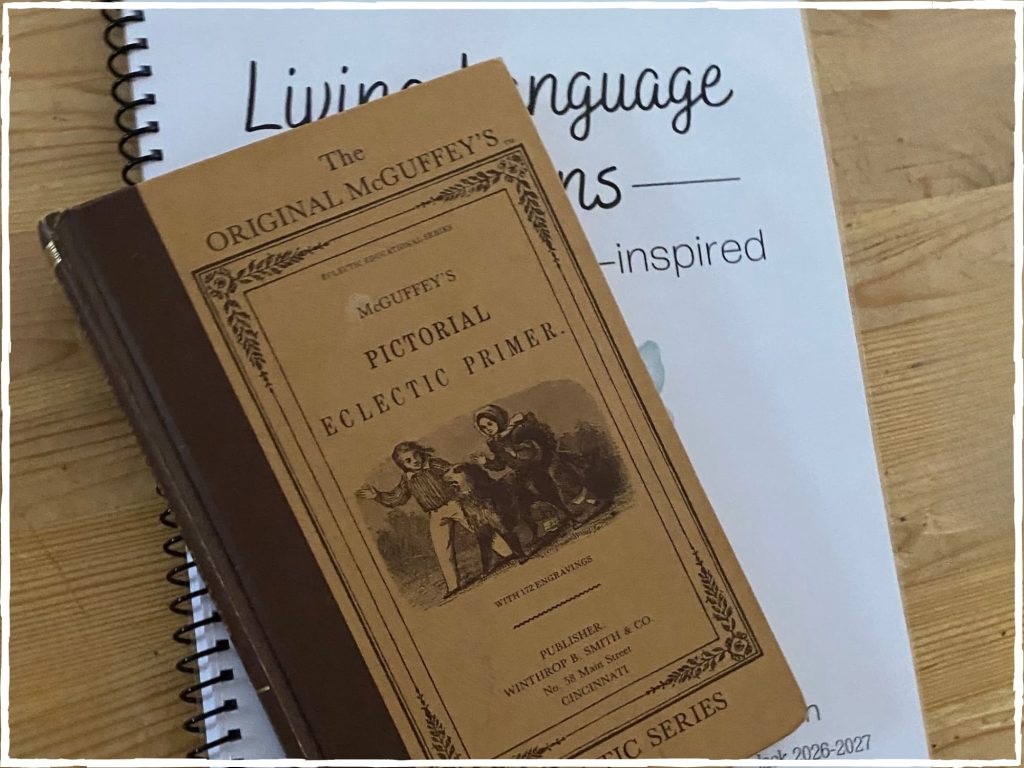
That is exactly why I created my Living Language Lessons notebook. It gives you a simple framework for turning beautiful passages from living books into complete language arts lessons, with space for copywork and transcription, narration, spelling and grammar work, and prepared dictation.
Instead of wondering what to do next, you have a gentle rhythm to follow while still keeping the books themselves at the center of the lesson.
If you love the idea of teaching language arts through living books but want someone to help you put it all together, Living Language Lessons was made for exactly that.
A Simple Way to Begin With Charlotte Mason Copywork
Charlotte Mason copywork gives your child a meaningful way to spend time with beautiful language while building strong handwriting and language arts habits.
Begin with a short passage your child can manage well, whether it comes from a living book, the poet you are studying, Scripture, or a reader. Over time, these small lessons help your child notice spelling, punctuation, sentence structure, and beautiful language more carefully.