How to Start a Nature Journal With Your Children
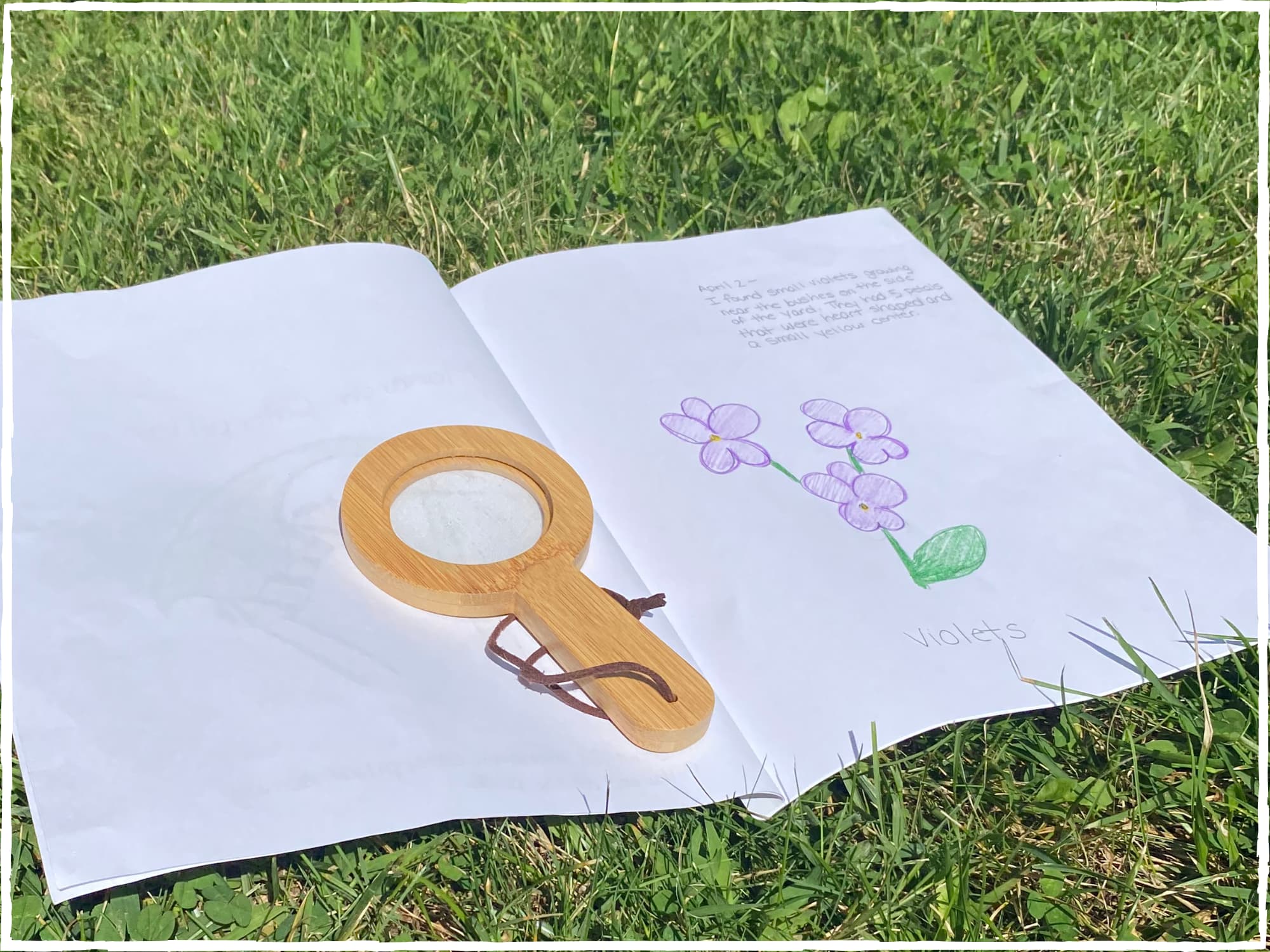
Spending plenty of time outdoors has always been an important part of our homeschool. Nature walks give my children time to explore, follow their curiosity, and become familiar with the birds, plants, insects, and changing seasons around them. Over the years, they have caught frogs, followed animal tracks, watched birds, collected leaves and flowers, and made so many little discoveries simply because they had the time to notice them.
Nature journaling gently brings some of those discoveries into our lessons. It gives children a place to choose something that caught their attention, look at it more closely, and record a little of what they noticed.
If you have been wanting to begin nature journaling with your children, I’ll show you what we actually do in our homeschool, what a simple nature journal entry can look like, and how to make it a useful part of your Charlotte Mason nature study.
This post may contain carefully chosen affiliate links to help support our homeschooling journey. Thank you for supporting my family through your purchases! You can read my full affiliate disclosure policy here.
What Is a Nature Journal and What Do You Need to Begin?
A nature journal is simply a place for children to keep a dated record of the things they have observed for themselves.
Charlotte Mason described it this way:
“The children keep a dated record of what they see in their nature note-books, which are left to their own management and are not corrected. These note-books are a source of pride and joy…”
— School Education, Vol. 3, p. 236
In practice, that record can be very simple. A child might draw a bird they watched at the feeder, paint a flower they found on a walk, write down where they saw an animal track, or add a few words about an insect they stopped to observe.
For our family, I use my A Gentle Year seasonal nature journals because I like having a little seasonal direction already built in. They give us ideas for what to notice while still leaving plenty of room for my children to follow their own interests and record what they actually find.
A blank sketchbook works well too. If you are choosing one, I would look for mostly blank pages with enough room for drawing and a little writing. Slightly heavier paper is helpful if your children enjoy watercolor pencils or a small amount of watercolor.
For supplies, we usually keep it simple:
- A pencil and eraser
- Colored pencils or the watercolor pencils we love
- A field guide or two, such as the Peterson First Guide to Birds or Peterson First Guide to Wildflowers
- Binoculars or a magnifying glass
That is really enough to begin. The journal can be guided or completely open-ended. What matters most is giving your child a place to record something they actually noticed for themselves.
What Should Children Put in a Nature Journal?
If you hand a child a blank nature journal and simply tell them to “draw something from nature,” it can be hard to know where to begin. I find it much easier to start with one thing that caught their attention on a nature walk and help them look at it a little more closely.
A simple nature journal entry might include:
- The date
- The name of what they found
- A sketch or watercolor
- Where they found it
- A few things they noticed
- A question they still have
They certainly do not need to include all of these each time. Think of them as ideas your child can pull from when they are staring at a blank page.
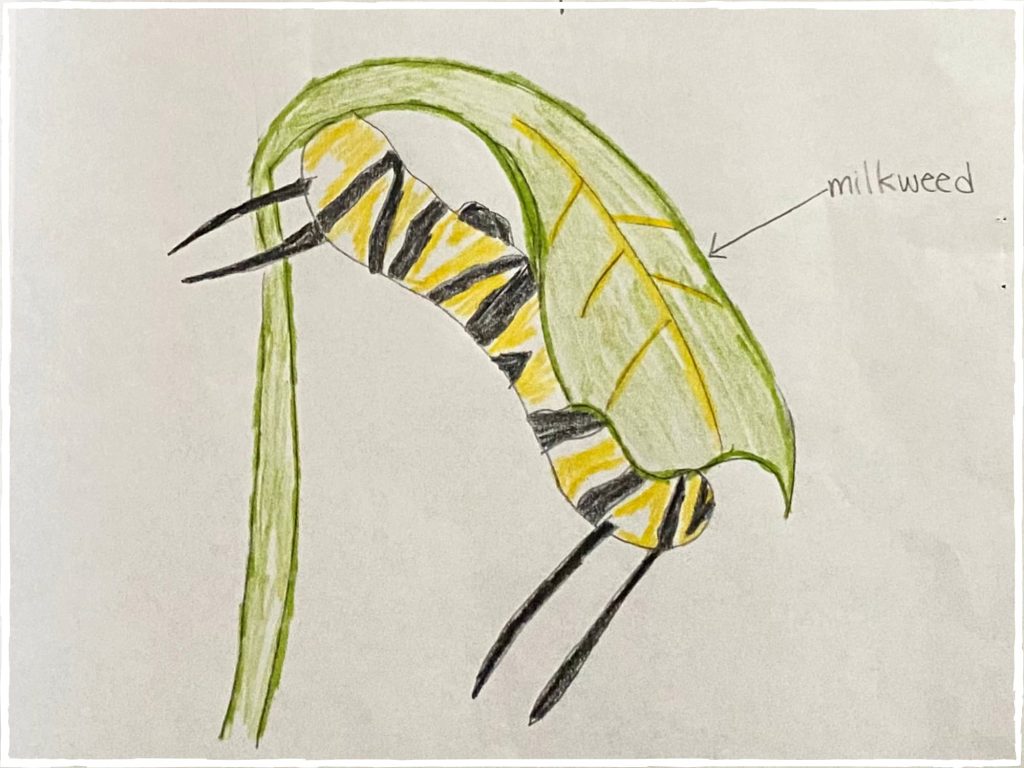
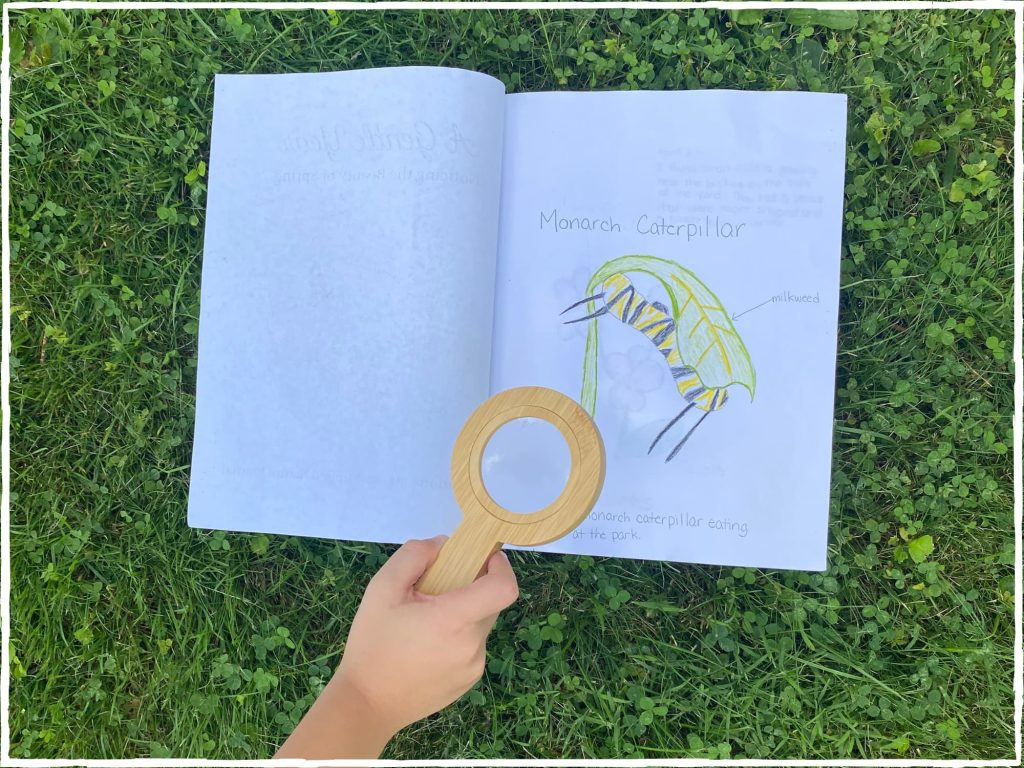
For example, imagine your child finds a monarch caterpillar on milkweed:
Sample Nature Journal Entry
August 15 — Monarch Caterpillar
I found this caterpillar on the milkweed by our garden. It had black, white, and yellow stripes. I watched it eat the edge of the leaf.
Beside those few sentences, your child could make a simple sketch or watercolor of the caterpillar.
If your child isn’t sure what to write, I would bring them back to what they actually saw:
- What color was it?
- Where did you find it?
- What was it doing?
- Was there anything about it you hadn’t noticed before?
You only need one or two observations to give them something meaningful to record.
A younger child may simply draw the caterpillar and tell you, “It was eating a leaf,” while you write down the observation for them. As children get older, they can begin keeping more of their own dated notes, drawings, bird or flower lists, and other details that help them remember what they observed.
The journal can grow with the child. What matters most is that the page reflects something they genuinely noticed for themselves.
Do We Nature Journal Outside or When We Get Home?
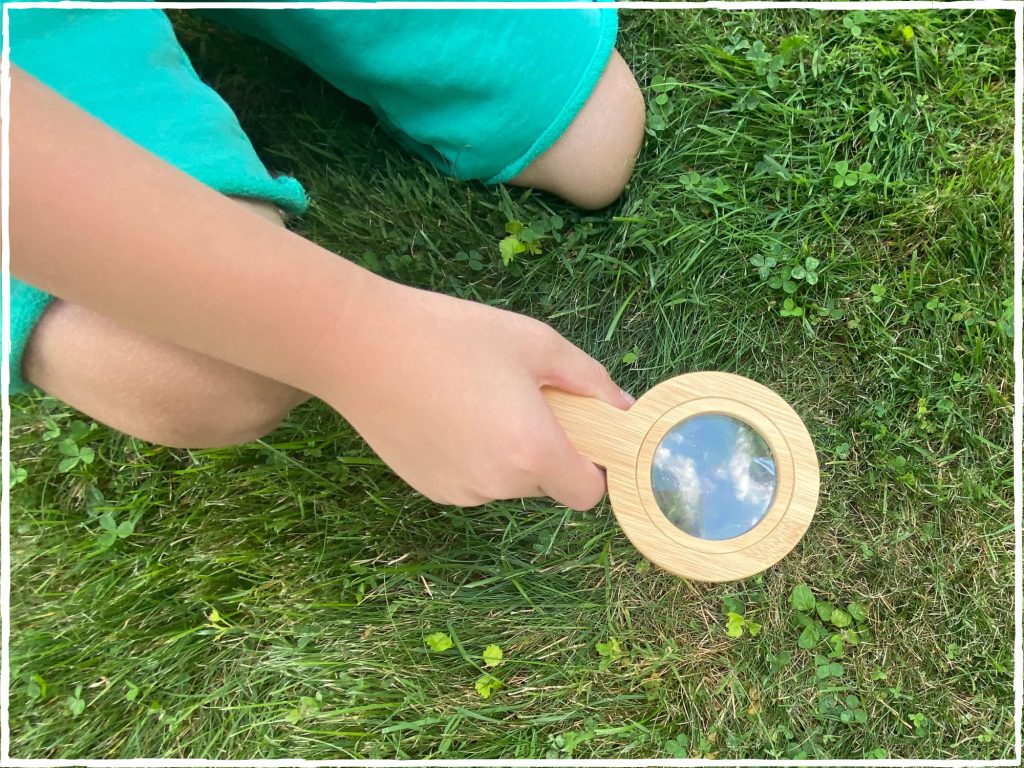
Either can work, and in our homeschool it really depends on the day.
Sometimes my children are happy to sit outside with their journals and sketch what they are seeing right in front of them. Other times they are much more interested in exploring, catching a frog, following animal tracks, or watching a bird for as long as they can.
On those days, I would rather let them stay engaged with what they have found and come back to the journal later. We can take a photo if it is helpful, talk about what they noticed, and make the entry once we are home while the experience is still fresh.
With a large family, I think it is important to keep this very flexible. Some children may want to sketch outside while others are still exploring, and that works well for us. I am much more interested in helping each child notice and record something meaningful than having everyone complete the same nature journal entry at the same time.
That flexibility helps keep the nature walk and my children’s observations at the center. The journal gives children a place to return to something that caught their attention, look at it more carefully, and record a little of what they discovered.
In our homeschool, we usually make a nature journal entry about once a week, but we spend time outside exploring and observing nature every day.
Simple Nature Journal Ideas for Every Season
One of the nicest things about nature journaling is that there is always something new to notice as the seasons change.
As the seasons change, there is always something new for your children to notice. Spring may bring the first wildflowers and returning birds, summer butterflies and garden life, fall changing leaves and acorns, and winter animal tracks, bare trees, and frost. These familiar seasonal changes give children plenty to observe and record in their nature journals.
You can use these as simple starting points and then let your child’s own discoveries lead the way. If you would like more ideas for what to look for throughout the year, I have separate spring, summer, fall, and winter nature study posts with plenty of seasonal inspiration for your walks.
This is also the idea behind my A Gentle Year seasonal nature journals. They give us a little seasonal direction while still leaving plenty of room for my children to record the things that actually catch their attention.
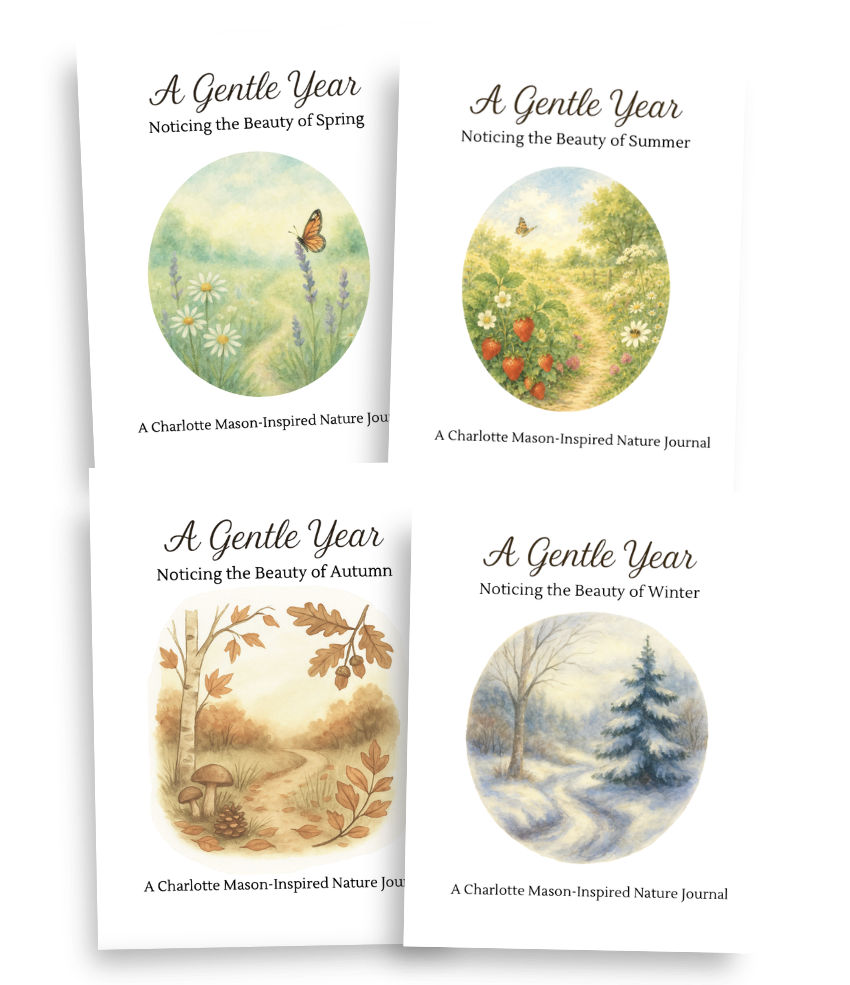
Year-Round Nature Study Bundle
A simple way to bring a little more direction to your nature walks throughout the year. Each seasonal journal gives you ideas for what to notice, while leaving plenty of room for your child’s own sketches, observations, and discoveries.
Explore the Bundle →A Simple Way to Begin Nature Journaling
Nature journaling can be such a meaningful part of a Charlotte Mason homeschool. It gives children a place to look more closely at the things that catch their attention and keep a record of what they are learning through their own observations.
The best place to begin is simply to go outside, see what catches your child’s attention, and let their journal grow from there.